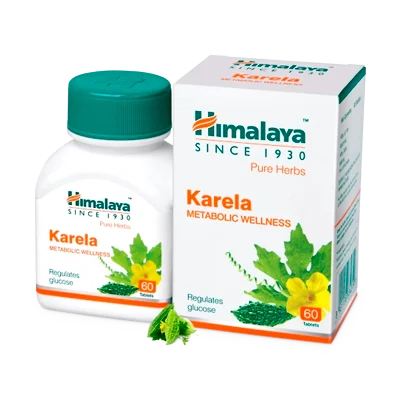
I used Karela alongside the eating plan I had already started. My stomach felt unsettled during the first few days, so I took the tablet with breakfast. The discomfort settled, but I still relied on my usual glucose checks rather than judging it by how I felt.
Karela
Karela is an herbal tablet made from bitter melon, or Momordica charantia. It is intended for adults seeking traditional metabolic wellness support. Its plant compounds, including charantin, may influence glucose metabolism.
Description
Karela is an herbal tablet product based on the bitter melon plant, scientifically known as Momordica charantia. It is intended for adults seeking traditional metabolic wellness support, especially as part of a balanced approach to glucose management. Its plant compounds, including charantin, are studied for their possible influence on glucose metabolism.
Composition
The fruit of Momordica charantia contains plant compounds such as charantin, polypeptide-p, cucurbitane-type triterpenoids, flavonoids, and phenolic compounds. Charantin is frequently discussed in research on bitter melon because laboratory and early clinical studies have examined its possible relationship with glucose handling.
Karela tablets provide a convenient oral form of this botanical tradition. The precise amount of each plant compound can vary according to cultivation, extraction, processing, and formulation. A supplement should therefore be viewed as a source of botanical support, not as a measured substitute for insulin or a prescribed glucose-lowering medicine.
The World Health Organization describes medicinal plants as products whose composition and clinical effects may be influenced by preparation methods and plant material quality [1]. That principle is relevant when comparing whole fruit, juice, tea, topical preparations, and tablets.
| Plant part or preparation | Traditional wellness use |
|---|---|
| Bitter melon fruit | Food use and traditional metabolic wellness support |
| Karela juice or leaf tea | Traditional oral preparations associated with glucose support |
| Karela fruit ointment | Traditional topical use for local skin care |
Role of Charantin in Karela
Charantin is a group of steroidal saponins identified in bitter melon. Research has explored whether charantin and other compounds may influence glucose transport, insulin signalling, or carbohydrate metabolism. These mechanisms remain more complex than a single-ingredient explanation, because bitter melon contains several phytochemicals that may act together.
Laboratory activity does not automatically predict the response from an oral tablet. Human studies of bitter melon have produced mixed results, with differences in preparation, dose, treatment duration, and participant health. The European Medicines Agency uses evidence quality, traditional use, and safety data when assessing herbal substances; those standards support realistic expectations for Karela rather than guaranteed glucose reduction [2].
Dosage and usage
Karela is taken orally as a tablet with water. Use the serving stated for this product and do not exceed it. The tablets are intended for adults seeking botanical metabolic support.
Practical points include:
- Take the tablets consistently at the same general time each day.
- Take them with food if stomach discomfort occurs.
- Do not crush or chew tablets unless the product directions specifically allow it.
- Do not use Karela tablets to replace insulin, metformin, sulfonylureas, or another prescribed diabetes treatment.
- If a serving is missed, take the next scheduled serving rather than doubling the amount.
Karela does not work like a rapid glucose-lowering rescue treatment. A person using insulin or medicines that can cause hypoglycaemia should monitor glucose more closely when introducing any product with potential glucose-lowering activity.
How it works
Charantin and other bitter melon phytochemicals may influence glucose transport, insulin signalling, or carbohydrate metabolism. Bitter melon contains several compounds that may act together, so its biological activity cannot be attributed to a single ingredient.
Indications
Karela is positioned for metabolic wellness and glucose regulation support rather than as a replacement for prescribed diabetes treatment.
Karela may suit an adult who wants a plant-based addition to dietary and lifestyle measures. It is a poor choice as a sole strategy for diagnosed diabetes, persistent high glucose, or symptoms suggesting inadequate treatment.
Comparison
Karela occupies a different place from prescription diabetes therapy. It is a botanical supplement used for traditional metabolic wellness, while prescription medicines are selected according to diagnosis, glycated haemoglobin, kidney function, cardiovascular risk, and other clinical factors.
| Approach | Main role | Main limitation |
|---|---|---|
| Karela tablets | Botanical support related to traditional glucose wellness | Human evidence is variable and product composition can differ |
| Dietary use of bitter melon | Food-based inclusion of Momordica charantia | Food portions are not equivalent to tablet preparations |
| Prescribed glucose-lowering treatment | Clinically monitored blood-glucose management | Requires individual medical selection and monitoring |
Contraindications
Karela is not suitable for everyone. Karela is not for you if you are pregnant, breastfeeding, prone to hypoglycaemia, or using glucose-lowering medicine without clinical guidance. Avoid it or obtain specific medical guidance before use if you:
- are pregnant or trying to conceive;
- are breastfeeding;
- have recurrent low blood glucose;
- use insulin or another glucose-lowering medicine;
- have liver or kidney disease;
- have a known allergy to bitter melon or related plants;
- are preparing for surgery or a medical procedure;
- are treating a child or adolescent.
When this is not for you
Pregnancy is a specific concern because concentrated bitter melon preparations have been associated with traditional warnings and limited safety evidence. People using insulin or sulfonylureas face a separate concern: combined glucose-lowering effects could produce sweating, shaking, dizziness, confusion, or unusual weakness.
Tell the clinician who manages your diabetes that you are using Karela. The most useful details are the product name, tablet schedule, glucose readings, and any episodes of sweating, trembling, or sudden weakness.
Side effects
Possible unwanted effects include nausea, abdominal discomfort, loose stools, stomach cramps, headache, or an unpleasant bitter aftertaste. Allergic reactions are possible in people sensitive to bitter melon or related plants in the Cucurbitaceae family.
Raw Karela, concentrated Karela juice, leaf preparations, and tablets should not be treated as interchangeable. Juice can be consumed in a larger volume than a tablet, while plant extracts may differ in concentration.
Stop taking the product and seek urgent medical care for facial swelling, breathing difficulty, fainting, severe vomiting, or signs of serious hypoglycaemia. Mild digestive symptoms may improve when the tablet is taken with a meal, but persistent symptoms require clinical assessment.
Common mistakes
Several habits can reduce the usefulness of Karela or create avoidable risk:
- Treating Karela as a substitute for prescribed diabetes medicine.
- Taking extra tablets after one high glucose reading.
- Combining Karela with insulin or sulfonylureas without monitoring for low glucose.
- Assuming Karela juice and tablets provide the same botanical exposure.
- Continuing use despite repeated diarrhoea, abdominal pain, rash, or dizziness.
- Forgetting to mention herbal products before surgery or a medication change.
- Measuring success by appetite or energy alone instead of recording glucose trends.
- Taking the tablet only on days when meals are especially high in sugar.
One practical mistake is starting several supplements at once. When symptoms or glucose changes appear, it becomes difficult to identify which product contributed.
Another is taking a missed serving late at night and then resuming the usual schedule the next morning. Doubling doses can increase unwanted effects without producing a predictable benefit.
What doctors say
Doctors generally focus on three questions: why the person wants Karela, what medicines they already use, and whether glucose control is being measured. A clinician may accept a botanical product as an adjunct while making clear that it cannot replace a treatment plan for diabetes.
In routine practice, the biggest concern is often unrecognised hypoglycaemia in people combining several glucose-lowering approaches. The opposite problem also occurs: a person may rely on Karela while delaying assessment for persistent thirst, frequent urination, blurred vision, unexplained weight loss, or fatigue.
A realistic expectation is gradual support within a broader routine involving meals, physical activity, sleep, and prescribed treatment where required. The evidence does not support promising a fixed glucose reduction for every user. The National Center for Complementary and Integrative Health describes bitter melon as an area where traditional use and laboratory research exceed the strength of consistent clinical evidence [3]. Responses differ between individuals. Monitoring helps separate perceived benefit from normal variation.
Frequently asked questions
Is Karela the same as bitter melon?
Karela is a common name for bitter melon, whose botanical name is Momordica charantia. The plant belongs to Cucurbitaceae. It is used as food and a traditional herbal ingredient. Botanical identity does not guarantee that every preparation has the same concentration of active compounds. WHO guidance from 2009 on medicinal plants supports evaluating the preparation and its use rather than assuming all forms are equivalent.
What is Karela used for?
Karela is used for traditional metabolic wellness and glucose regulation support. Its plant constituents, including charantin, have been studied for possible effects on glucose metabolism. Evidence in humans remains variable, so Karela should not replace prescribed treatment for diabetes. The EMA’s 2018 herbal-medicine framework emphasises evidence quality and a clear distinction between traditional use and established clinical efficacy.
Can Karela replace diabetes medicine?
Karela should not replace insulin, metformin, sulfonylureas, or another prescribed diabetes treatment. A person with diagnosed diabetes needs treatment decisions based on glucose results, glycated haemoglobin, kidney function, and general health. Stopping prescribed medicine can allow glucose to remain dangerously high. The American Diabetes Association’s Standards of Care published in 2025 continue to place evidence-based diabetes treatment and monitoring at the centre of care [4].
Can Karela cause low blood sugar?
Karela may influence glucose metabolism, so low blood sugar is a concern when it is combined with insulin or medicines that stimulate insulin release. Warning signs include sweating, shaking, hunger, dizziness, confusion, weakness, and palpitations. Anyone experiencing repeated symptoms should record the timing and discuss the combination with the clinician managing their diabetes. NCCIH information from 2024 also highlights the need for caution with bitter melon products used alongside glucose-lowering therapy .
Is Karela suitable during pregnancy?
Karela is not a suitable self-care choice during pregnancy because safety information for concentrated preparations is limited and traditional sources raise specific concerns. The same caution applies when trying to conceive or breastfeeding. Pregnant people should avoid starting Karela without an individual assessment from their maternity or medical team. WHO’s 2009 medicinal-plant safety approach treats pregnancy as a population requiring additional evidence before use.
How long does Karela take to work?
Karela does not have a predictable onset comparable to a rapid-acting glucose-lowering medicine. Any change in glucose may depend on diet, activity, existing treatment, product preparation, and individual metabolism. Judge the response through an organised record of readings rather than a single result. The clinical evidence reviewed by the EMA in 2018 herbal-medicine contexts does not establish one universal timeframe for bitter melon products.
Can Karela tablets be taken with food?
Taking Karela with food may help reduce bitter aftertaste or mild stomach discomfort. Food does not remove the need to consider interactions with diabetes medicines. People using insulin or other glucose-lowering treatment should monitor for symptoms of low glucose when starting the product. The 2025 American Diabetes Association Standards of Care support medication and supplement review as part of individual diabetes management .
Do you offer anonymous delivery?
Your order will be securely packed and shipped within 24 hours. This is exactly what your package will look like (images of an actual item sent). It has the size and look of a regular private letter (24x11x0.7 cm) and its contents cannot be seen.
Comparison
Culinary Uses and Preparation Methods
Karela is widely used as a vegetable in South Asian cooking. The fruit may be sliced, stuffed, stir-fried, or prepared as Karela bitter melon curry. Cooking changes the texture and can soften the bitterness, while the fruit remains recognisable as a traditional food ingredient.
Kosher salt is sometimes rubbed over sliced Indian Bitter Melon to draw out moisture and reduce the intensity of its bitter flavour. The pieces are then rinsed or squeezed before cooking. Amchur powder, made from dried unripe mango, can add acidity and help balance the flavour in a Karela curry.
These culinary methods concern fresh food preparation. They should not be used to estimate the serving of Karela tablets, because a tablet formulation and a cooked vegetable contain different amounts and forms of plant constituents.
Traditional Culinary Pairings and Accompaniments
Karela is commonly paired with onions, tomatoes, lentils, spices, and rice. Amchur powder, tamarind, coriander, cumin, turmeric, and chilli may be used to create a stronger sweet-sour or savoury profile.
The taste is distinctly bitter. It also explains why some people prefer tablets or tea over fresh fruit and juice.
Karela: Reviews and Experiences
I hoped the tablets would make my readings fall quickly. They did not. The useful change was becoming more consistent with meals and recording my readings, although I was disappointed that the tablet alone did not solve the problem.
The tablets were easy to take and I noticed no major side effects. I stopped after my doctor advised caution because I was already using diabetes treatment and had two episodes of shakiness.
I took Karela with food and had no trouble with it. My readings varied with what I ate, so I did not credit the product for every improvement. The routine helped me pay closer attention to my meals.
Sources
- World Health Organization (2009). WHO monographs on selected medicinal plants, Volume 4.
- European Medicines Agency (2018). European Union herbal monographs and assessment reports for herbal medicinal products.
- National Center for Complementary and Integrative Health (2024). Bitter Melon (Momordica charantia), Herbs at a Glance.
- American Diabetes Association (2025). Standards of Care in Diabetes—2025.