
Verified
The knee swelling eased by the second day and stairs became easier. I had mild heartburn, so I took the tablet after breakfast and stopped once the flare settled.
18 Nov 2026
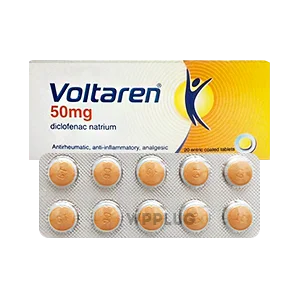
Voltaren is an oral diclofenac sodium tablet for adults with inflammatory pain and swelling. The dose is stated on the pack—follow the leaflet. It provides short-term anti-inflammatory relief by reducing prostaglandins that sensitise painful tissues.
Voltaren is an oral diclofenac sodium tablet for adults with inflammatory pain and swelling. The dose is stated on the pack—follow the leaflet. It belongs to the non-steroidal anti-inflammatory drug group and reduces prostaglandins that sensitise painful tissues. The tablet is used for short-term relief when pain needs anti-inflammatory treatment.
Voltaren contains diclofenac sodium. The dose is stated on the pack—follow the leaflet. Diclofenac is an NSAID with analgesic, anti-inflammatory, and antipyretic properties. The active substance reduces cyclo-oxygenase activity, lowering the production of prostaglandins involved in pain, swelling, and fever [1].
The dose stated on the pack provides a defined oral dose for conditions where inflammation contributes to symptoms. It is different from topical diclofenac gels because the tablet delivers diclofenac through the digestive system and into the bloodstream, allowing treatment of pain affecting more than one area.
Diclofenac sodium is a salt form of diclofenac. After oral administration, the salt dissolves and releases diclofenac for absorption. The clinical effect depends on the dose, the condition being treated, kidney and liver function, age, and other medicines.
Voltaren is a tablet taken by mouth. The dose is stated on the pack—follow the leaflet. The exact schedule depends on the diagnosis, age, kidney and liver function, other medicines, and the duration of treatment intended by the prescriber.
Use the following principles:
Voltaren is not designed for indefinite self-treatment of unexplained pain. Persistent pain, recurrent swelling, black stools, vomiting blood, or new shortness of breath requires prompt clinical assessment.
A tablet should not be split or crushed unless the product’s approved instructions and the prescriber permit this. Altering a coated tablet can affect how the dose is released or tolerated in the stomach.
Diclofenac blocks cyclo-oxygenase enzymes, commonly referred to as COX-1 and COX-2. These enzymes help produce prostaglandins. Prostaglandins contribute to pain sensitivity, local swelling, and fever during tissue inflammation.
Reducing prostaglandins can make movement easier and lessen tenderness. The same pathway also supports protective functions in the stomach, helps regulate kidney blood flow, and contributes to platelet activity. This explains why diclofenac can relieve inflammation while also causing gastrointestinal, renal, and cardiovascular problems in susceptible people.
Voltaren does not produce an opioid-like effect. It does not directly cause sedation in the way opioid analgesics can, although dizziness or drowsiness may occur as an adverse effect.
Voltaren is used for inflammatory musculoskeletal conditions in adults. The medicine can reduce pain, tenderness, stiffness, and swelling when these symptoms are linked to inflammation.
Common clinical uses include:
Diclofenac does not repair damaged cartilage, reverse arthritis, or remove the underlying cause of chronic pain. It controls inflammatory symptoms while the underlying condition is assessed and managed.
For a single painful joint, oral treatment exposes the whole body to diclofenac. This matters when a person has a history of stomach ulcers, kidney disease, hypertension, heart disease, or cardiovascular risk factors. NICE guidance recommends selecting an NSAID after considering gastrointestinal, renal, hepatic, and cardiovascular risks [2].
A useful clinical distinction is the difference between inflammation and simple mechanical pain. Swelling, warmth, morning stiffness, and pain that improves as movement begins suggest an inflammatory component. Pain caused by nerve compression may require a different treatment approach.
The most useful comparison is between active ingredients and routes of administration, not commercial product names.
| Approach | Main feature | Main limitation |
|---|---|---|
| Diclofenac sodium tablets | Systemic anti-inflammatory and analgesic action | Greater whole-body exposure and gastrointestinal, kidney, and cardiovascular risk |
| Ibuprofen tablets | Systemic NSAID action with a different chemical structure | Similar NSAID precautions; unsuitable for some people with ulcer, kidney, or cardiovascular risks |
| Topical NSAID gel | Local treatment with lower systemic exposure than tablets | Less suitable for widespread pain or areas where topical application is impractical |
Diclofenac and ibuprofen both reduce prostaglandin production, yet one is not automatically safer for every person. The choice depends on medical history, treatment duration, concurrent medicines, and the location of pain.
Topical treatment may suit a small superficial area, such as one knee or hand joint. An oral tablet may be selected when several joints are painful or when a topical application cannot reach the affected tissue. Oral treatment still requires careful risk assessment because the active ingredient circulates throughout the body.
Cochrane evidence supports topical NSAIDs for some acute localised musculoskeletal pain, while oral NSAIDs remain useful when systemic treatment is appropriate [3]. The two routes should not be combined casually, since topical diclofenac can still contribute to total NSAID exposure.
This medication is not for you if you:
Pregnancy requires special care. NSAIDs are generally avoided in the third trimester because they can affect fetal circulation, amniotic fluid, labour, and bleeding. Diclofenac should be used during earlier pregnancy only when the expected benefit justifies the potential risk.
Important interactions include:
Voltaren may not be suitable if you have had a stomach ulcer or bleeding, severe heart, kidney, or liver disease, or a serious reaction to aspirin or another NSAID. Tell a clinician if you are pregnant, recovering from bypass surgery, or taking blood thinners, steroids, antidepressants, blood-pressure medicines, diuretics, lithium, methotrexate, ciclosporin, tacrolimus, or another NSAID. Alcohol can worsen stomach irritation and may make dizziness more troublesome. Regular heavy alcohol use also increases concern about liver injury.
Digestive symptoms are among the most common problems with oral diclofenac. Possible effects include indigestion, nausea, abdominal pain, diarrhoea, constipation, and heartburn. Taking the tablet with food may reduce irritation, but it does not remove the risk of ulceration or bleeding.
Other possible adverse effects include:
Stop the medicine and obtain urgent medical help for vomiting blood, black tarry stools, severe abdominal pain, facial swelling, breathing difficulty, chest pain, sudden weakness, or one-sided speech difficulty. These symptoms can indicate gastrointestinal bleeding, a serious allergic reaction, heart attack, or stroke.
Diclofenac has been associated with cardiovascular risk, especially at higher doses and during longer treatment. The EMA review of systemic diclofenac concluded that cardiovascular precautions are needed, with risk assessment before treatment in people who have cardiovascular disease or major risk factors [4].
One practical detail is easy to miss: ankle swelling may be mistaken for ordinary inactivity. New swelling after starting an NSAID can reflect fluid retention and deserves attention, especially in people with heart failure or hypertension.
Liver injury is uncommon but clinically significant. Yellowing of the skin or eyes, dark urine, severe tiredness, persistent nausea, or pain under the right ribs should prompt medical review.
Several routine errors can reduce benefit or increase harm:
One frequently overlooked mistake is failing to count topical NSAIDs, aspirin, and combination cold remedies as possible contributors to total anti-inflammatory exposure.
In clinical practice, physicians usually treat oral diclofenac as a targeted short-course medicine rather than a default long-term pain solution. The decision often rests on three questions: how severe the inflammation is, what risks the patient carries, and whether a lower-risk treatment could provide similar relief.
Doctors commonly check blood pressure, kidney function, ulcer history, cardiovascular disease, pregnancy status, and concurrent medicines. A person who tolerated diclofenac years ago may still need reassessment after developing hypertension, kidney disease, or a new anticoagulant prescription.
The main advantage is potent anti-inflammatory analgesia in a convenient oral form. The trade-off is systemic exposure. A person may experience good pain relief while still developing silent blood-pressure, kidney, or gastrointestinal problems.
SAHPRA and international regulators classify diclofenac within a group that requires attention to dose, duration, contraindications, and interactions. Medical supervision becomes more important when treatment continues beyond a brief acute episode.
Voltaren can be used for inflammatory musculoskeletal pain, including some joint, back, soft-tissue, and injury-related conditions. The benefit is greatest when inflammation contributes to pain rather than when symptoms arise solely from nerve compression or a structural problem. NICE guidance published in 2022 recommends matching NSAID treatment to individual gastrointestinal, renal, hepatic, and cardiovascular risk . A new or persistent pain pattern needs assessment rather than repeated self-treatment. NICE also advises review when symptoms persist.
Paracetamol and diclofenac act through different pathways, so a clinician may sometimes use them together. The combination still requires attention to the total daily paracetamol dose, liver disease, alcohol use, and other combination products. The 2015 FDA Medication Guide for Non-Steroidal Anti-Inflammatory Drugs warns that patients should review all pain medicines and relevant medical conditions before combining treatments [5]. Do not add ibuprofen, naproxen, or another NSAID to the combination without explicit instructions.
Some people notice analgesic benefit after the first dose, while inflammatory stiffness may improve over the next several days. The timing depends on the condition, the degree of inflammation, food intake, absorption, and individual response. The 2023 EMA product information describes diclofenac as an NSAID that reduces prostaglandin-mediated pain and inflammation rather than acting as an immediate anaesthetic. Lack of improvement, worsening pain, or repeated need for treatment should trigger reassessment.
Yes. Diclofenac can cause ulceration, gastrointestinal bleeding, and perforation, sometimes without early warning symptoms. Risk increases with older age, previous ulcer disease, anticoagulants, corticosteroids, antiplatelet medicines, SSRIs, smoking, and longer treatment. The 2013 EMA systemic diclofenac safety review identified gastrointestinal and cardiovascular precautions as key parts of safe prescribing . Black stools, vomiting blood, faintness, or severe abdominal pain require urgent medical attention.
Diclofenac is not routinely suitable during pregnancy, and NSAIDs are generally avoided during the third trimester. Earlier use requires a clinician to weigh the expected benefit against pregnancy-related risks. The 2021 FDA prescribing information for systemic diclofenac includes pregnancy warnings involving fetal circulation, amniotic fluid, labour, and maternal or fetal bleeding. Pregnancy, attempted conception, and breastfeeding should be disclosed before treatment is selected.
Yes. Diclofenac can reduce kidney blood flow in susceptible people, causing worsening kidney function or fluid retention. Risk is higher with dehydration, chronic kidney disease, heart failure, older age, ACE inhibitors, angiotensin receptor blockers, and diuretics. The WHO’s 2019 medication-safety principles support careful review of renal risk when medicines affect kidney perfusion. Reduced urine output, sudden swelling, unusual fatigue, or breathlessness warrants prompt assessment.
Avoid driving, cycling, working at heights, or operating machinery until the effect is understood. Dizziness may occur with diclofenac, although it is not the intended therapeutic effect. Severe dizziness with fainting, chest pain, weakness, breathing difficulty, or an allergic rash needs urgent evaluation. A prescriber can decide whether the symptom reflects Voltaren, another medicine, dehydration, low blood pressure, or the underlying illness. NHS guidance published in 2023 also recommends seeking advice when dizziness persists or affects daily activities.
Your order will be securely packed and shipped within 24 hours. This is exactly what your package will look like (images of an actual item sent). It has the size and look of a regular private letter (24x11x0.7 cm) and its contents cannot be seen.


The knee swelling eased by the second day and stairs became easier. I had mild heartburn, so I took the tablet after breakfast and stopped once the flare settled.
The back pain improved enough to sleep. I felt slightly dizzy after one dose, so I avoided driving and asked for a review before taking more.
The hand stiffness improved, but my blood pressure readings were higher than usual and my ankles looked puffy. The treatment was changed after a review.
It helped with menstrual pain when taken early. I developed stomach discomfort when I took it without food, and that settled after changing the timing.
The shoulder pain was better, but the benefit did not last after stopping. The clinician explained that the underlying tendon problem still needed attention.