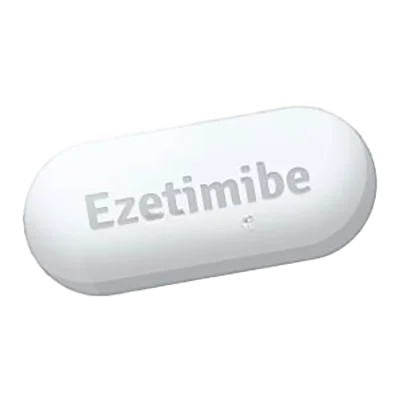
Description
Ezetimibe is a prescription cholesterol-lowering tablet for adults with high LDL cholesterol and selected inherited lipid disorders. It reduces cholesterol absorption in the small intestine and may be used alone or alongside a statin when additional LDL reduction is needed.
Composition
Ezetimibe is a prescription cholesterol-lowering tablet. It reduces cholesterol absorption in the small intestine and may be used alone or alongside a statin. The usual regimen is one oral tablet once daily, taken with or without food, according to the prescriber’s instructions.
Dosage and usage
The usual clinical regimen for Ezetimibe is one oral tablet once daily. The appropriate strength and duration are selected by the prescriber according to the lipid disorder, treatment response, age, other medicines, and whether a statin or fibrate is also being used.
Administration principles include:
- Swallow the tablet with water.
- Take it at the same time each day.
- Take it with or without food.
- Separate it from Cholestyramine, Colestipol, or another bile acid sequestrant by taking Ezetimibe at least 2 hours before or 4 hours after the sequestrant.
- If a dose is missed, take it when remembered unless the next dose is close; do not double the next dose.
- Continue the prescribed lipid-lowering plan unless a clinician changes it because of a specific reaction or test result.
Ezetimibe is not an emergency treatment for a sudden cholesterol result. LDL reduction develops through regular use, and follow-up lipid testing is used to determine whether the treatment plan is achieving its target.
Do not take two tablets to compensate for a missed dose. A phone reminder linked to a daily routine, such as breakfast or brushing your teeth, reduces accidental omissions.
How it works
Ezetimibe belongs to the cholesterol absorption inhibitor class. Its main action occurs at the brush border of the small intestine, where it blocks the Niemann-Pick C1-Like 1 (NPC1L1) protein. This transporter helps move cholesterol from the intestinal lumen into intestinal cells.
By inhibiting NPC1L1, Ezetimibe reduces the delivery of dietary and biliary cholesterol to the liver. The liver then removes more LDL cholesterol from the bloodstream, lowering LDL cholesterol and total cholesterol levels. The effect is different from statins, which reduce cholesterol synthesis inside the liver through HMG-CoA reductase inhibition. [1]
Ezetimibe is converted in the intestinal wall and liver to Ezetimibe-glucuronide, an active metabolite that also contributes to NPC1L1 inhibition. Most of the drug and metabolite leave the body through the faeces, with a smaller amount eliminated in urine. The pharmacological effect is localised mainly to intestinal cholesterol transport rather than direct inhibition of a hepatic synthesis enzyme.
Indications
Ezetimibe is used to reduce elevated LDL cholesterol in Primary Hyperlipidemia. It may be prescribed as monotherapy or added to a statin when a single treatment does not lower LDL cholesterol sufficiently.
Clinical uses include:
- Primary Hyperlipidemia, including raised LDL cholesterol without a single identifiable secondary cause.
- Heterozygous Familial Hypercholesterolemia, an inherited condition that causes lifelong elevation of LDL cholesterol.
- Homozygous Familial Hypercholesterolemia, a more severe inherited disorder that often requires several lipid-lowering approaches.
- Sitosterolemia, a rare genetic condition in which plant sterols accumulate in the body.
- Persistent LDL elevation in patients who cannot tolerate the required statin intensity.
- Additional LDL reduction when a statin alone does not achieve the treatment target.
For Sitosterolemia, Ezetimibe reduces intestinal absorption of plant sterols as well as cholesterol. Its role in inherited lipid disorders is determined by the wider treatment plan, baseline lipid results, cardiovascular risk, age, and response to previous therapy. The EMA recognises Ezetimibe as a treatment option for selected lipid disorders, including use alongside statins when clinically appropriate. [2]
Ezetimibe lowers LDL cholesterol more directly than it lowers triglycerides. It is therefore chosen mainly for LDL management rather than as the primary treatment for severe isolated hypertriglyceridaemia.
Comparison
Ezetimibe acts mainly in the intestine, while Statins act primarily in the liver. This distinction explains why clinicians may combine the two classes. A patient whose LDL remains elevated on Atorvastatin or Rosuvastatin may gain additional reduction from Ezetimibe without simply increasing the statin dose.
Fibrates are more relevant when triglycerides are elevated. Bile Acid Sequestrants also lower LDL cholesterol by interrupting bile acid recycling, though gastrointestinal effects and binding interactions can limit their use.
Ezetimibe does not replace cardiovascular risk assessment. Smoking, blood pressure, diabetes, kidney disease, diet, physical activity, and previous cardiovascular events all influence the LDL target and the intensity of treatment.
When this is not for you
Ezetimibe is not suitable for everyone. NOT for you if you have a known allergy to Ezetimibe, active liver disease during statin combination treatment, or an unreviewed serious interaction. Severe or unexplained muscle symptoms require assessment before treatment continues.
Patients with Sitosterolemia need a treatment plan designed for that condition. A standard cholesterol-focused plan may not address the abnormal plant-sterol absorption sufficiently.
Side effects
Ezetimibe is generally tolerated by many patients, though side effects can occur. In clinical trials, reported reactions have included stomach pain, diarrhoea, joint pain, tiredness, upper respiratory symptoms, and muscle discomfort. The frequency and severity can change when Ezetimibe is taken with a statin.
Common or clinically relevant effects include:
- Abdominal pain or stomach discomfort.
- Diarrhoea.
- Joint pain.
- Muscle pain or weakness.
- Tiredness.
- Headache.
- Raised liver enzymes, more often considered when Ezetimibe is combined with a statin.
Seek urgent medical assessment for unexplained severe muscle pain, marked weakness, dark urine, yellowing of the skin, unusually pale stools, severe abdominal pain, facial swelling, or difficulty breathing. These symptoms can indicate a serious muscle, liver, or allergic reaction.
Muscle symptoms deserve careful interpretation. A patient may experience muscle pain from a statin, Ezetimibe, another medicine, strenuous exercise, or an unrelated condition. Stopping every lipid-lowering medicine immediately can leave LDL cholesterol untreated. Clinicians usually assess timing, severity, creatine kinase when indicated, liver enzymes, thyroid status, and other medicines before changing the regimen.
Liver enzyme monitoring becomes more relevant when Ezetimibe is combined with a statin. The FDA prescribing information warns about liver enzyme elevations with combination therapy and recommends clinical assessment when symptoms suggest liver injury. [3]
Muscle pain that starts soon after a new lipid medicine should be recorded with its location, severity, and start date. That simple timeline helps distinguish a temporary symptom from a pattern requiring treatment changes.
Common mistakes
Several practical errors can reduce treatment benefit or create avoidable side effects:
- Taking Ezetimibe at the same time as Cholestyramine or Colestipol.
- Assuming it must be taken at night, even though Ezetimibe can be taken at any consistent time.
- Stopping treatment once a cholesterol result improves.
- Doubling the next tablet after a missed dose.
- Treating muscle pain as proof that Ezetimibe is the only possible cause.
- Failing to mention over-the-counter medicines, herbal products, or immunosuppressants.
- Expecting Ezetimibe to correct a high-triglyceride problem on its own.
- Continuing a statin combination despite severe weakness, dark urine, or jaundice.
- Missing follow-up lipid testing after a treatment change.
One easily overlooked detail is that combination therapy creates a different safety picture from Ezetimibe alone. A new symptom after adding Ezetimibe may relate to the statin, the interaction between treatments, or another medicine started at the same time.
What doctors say
In clinical practice, doctors often view Ezetimibe as a useful second mechanism when LDL cholesterol remains above target on a statin. It is also considered when a patient cannot tolerate the statin intensity that would otherwise be required.
A clinician will usually assess:
- Baseline LDL cholesterol and the desired treatment target.
- Previous response to a statin or other lipid-lowering therapy.
- Muscle symptoms and previous creatine kinase results when relevant.
- Liver disease, alcohol intake, and liver enzyme results.
- Kidney function and the complete medication list.
- The presence of Familial Hypercholesterolemia or premature cardiovascular disease in the family.
The EMA and FDA clinical information support Ezetimibe as monotherapy or adjunctive therapy for appropriate lipid disorders. Treatment decisions remain individual because the same LDL value can represent different levels of cardiovascular risk in different patients.