Verified
I used Abana tablets for several weeks as part of a wider diet and exercise plan. I did not notice a dramatic change in how I felt, but I tolerated it without stomach problems.
26 Oct 2026

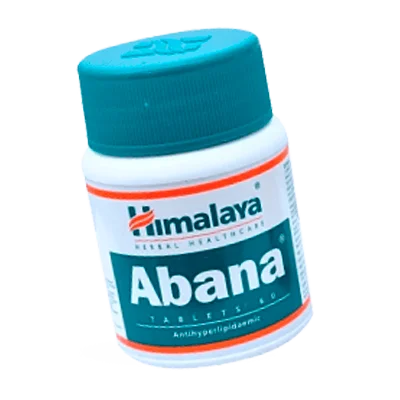
Abana is a polyherbal Ayurvedic tablet for adults seeking cardiovascular wellness support. It may complement diet, physical activity, monitoring, and prescribed care. Its potential benefit relates to botanical support for heart, circulation, lipid handling, and general vitality.
Abana is an Ayurvedic herbal tablet formulation for adults seeking nutritional support for cardiovascular wellness. It is a polyherbal Ayurvedic formulation rather than a single-molecule cardiovascular drug, intended for supportive heart-health and lipid-balance care.
Abana is a multi-herbal Ayurvedic tablet rather than a single-molecule cardiovascular drug. The formulation is associated with botanical ingredients used traditionally in Ayurvedic practice for heart, circulation, lipid, and general vitality support.
Traditional botanical use does not automatically establish the same level of evidence as a registered prescription treatment. The World Health Organization describes traditional and complementary medicine as a field requiring appropriate quality, safety, regulation, and evidence standards.
Use the serving instructions supplied for Abana and swallow the tablets with water. Do not exceed the stated daily serving. Taking tablets at a consistent time can make missed doses easier to identify.
The exact duration of use should reflect the intended goal and the person’s medical history. Persistent high blood pressure, high cholesterol, exertional chest discomfort, or palpitations require clinical assessment rather than prolonged self-treatment.
A multi-herbal cardiovascular formulation may influence several biological pathways at once, including oxidative balance, vascular tone, lipid handling, inflammation, and stress responses. The exact clinical effect depends on the botanical identity, extract concentration, manufacturing quality, dose, and duration of use.
Antioxidant activity is often discussed in relation to herbal cardiovascular products. Laboratory antioxidant findings can explain a possible biological pathway, yet they do not prove that a supplement prevents a heart attack or reverses atherosclerosis in people.
Abana tablets are presented as a polyherbal Ayurvedic formulation associated with heart-health support. Its role is supportive: people may use it alongside appropriate diet, physical activity, blood-pressure monitoring, and treatment prescribed for an established cardiovascular condition.
Cardiovascular wellness involves several measurable factors, including blood pressure, blood cholesterol, triglycerides, blood glucose, body weight, smoking status, sleep, and physical activity. A supplement may fit into this wider plan, but it cannot be used to diagnose angina, heart failure, arrhythmia, or other cardiac disorders.
The United States Food and Drug Administration describes botanical products as complex mixtures whose quality depends on identity, consistency, manufacturing controls, and evidence for the intended use [1].
| Approach | Main role | Main limitation |
|---|---|---|
| Abana tablets | Supportive polyherbal cardiovascular wellness | Evidence and composition may not be equivalent to a single-ingredient prescription treatment |
| Lifestyle programme | Improves several cardiovascular risk factors together | Requires sustained changes and measurable follow-up |
| Prescription cardiovascular treatment | Targets defined conditions such as hypertension or dyslipidaemia | Requires individual selection, monitoring, and interaction review |
Prescription treatment is selected according to the diagnosis. For example, high LDL cholesterol may require lipid-lowering therapy, while persistent hypertension may require one or more blood-pressure medicines. Abana should be viewed as an adjunctive wellness product rather than a replacement for those treatments.
A clinician may also recommend dietary fibre, weight reduction, smoking cessation, physical activity, or diabetes management. These measures address risk factors that a tablet alone cannot correct.
Extra caution is needed with medicines that affect cardiovascular function. These include antihypertensives, diuretics, anti-anginal medicines, anti-arrhythmic medicines, anticoagulants, antiplatelet medicines, lipid-lowering medicines, diabetes medicines, and medicines processed extensively by the liver.
Specific interaction evidence for a multi-herbal formulation may be limited. That limitation makes medication review more important, not less. Do not combine Abana with another cardiovascular supplement without checking for overlapping ingredients or additive effects on blood pressure, heart rate, glucose, or clotting.
Abana may not be appropriate if you are allergic to one of its ingredients, are pregnant or breastfeeding without professional advice, or have symptoms that could signal an urgent heart problem. You should also get specific medical advice before using it if you have liver or kidney disease, unstable blood pressure, unexplained fainting, a bleeding problem, planned surgery, or take medicines for blood pressure, heart rhythm, clotting, diabetes, or cholesterol.
Abana may be tolerated without problems by some adults, while others may develop digestive or allergic symptoms. Botanical mixtures can contain several biologically active constituents, so tolerability can vary between individuals.
Possible mild reactions include:
Stop using the product and obtain urgent help for swelling of the lips or tongue, wheezing, difficulty breathing, fainting, or a rapidly spreading rash. These symptoms may indicate a serious allergic reaction.
Dizziness deserves practical attention. It can increase the risk of falling, especially in older adults or people taking blood-pressure medicines. Avoid driving or operating machinery until you know how the tablets affect you.
The European Medicines Agency’s herbal-medicinal-product framework stresses the need to consider traditional use, quality, safety, and evidence together when evaluating herbal products [2].
Several practical errors can reduce the value of a cardiovascular supplement or create avoidable risk:
A doctor would usually place Abana within a risk-factor plan rather than treat it as a stand-alone therapy. The useful question is whether blood pressure, lipid results, exercise tolerance, and symptoms are improving over time.
Clinical practice also shows why symptom-based assessment can be misleading. High cholesterol and hypertension often produce no obvious warning signs, while chest pain, breathlessness, and fainting can indicate a condition requiring immediate assessment.
A clinician reviewing Abana would ask about:
The South African Health Products Regulatory Authority, or SAHPRA, provides the national regulatory context for health products in South Africa. Product use should remain consistent with the permitted health-product information and with clinically appropriate monitoring.
Abana is used as a supportive Ayurvedic herbal product for cardiovascular wellness. It may be considered alongside lifestyle measures for adults concerned about general heart-health support, while diagnosed conditions require appropriate clinical treatment. WHO guidance published in 2019 places traditional and complementary products within a framework that includes quality, safety, regulation, and evidence.
Abana should not be presented as a replacement for lipid-lowering treatment or a lipid profile. High cholesterol is assessed through blood testing, and the appropriate response depends on LDL cholesterol, triglycerides, total cardiovascular risk, diabetes, kidney function, and family history. FDA botanical-product guidance from 2016 distinguishes traditional or botanical use from proof of a defined treatment effect.
A possible additive effect on blood pressure or dizziness should be considered when Abana is combined with antihypertensive treatment. The risk depends on the complete formulation and the person’s medicines, health conditions, and blood-pressure readings. SAHPRA’s South African regulatory setting supports careful product information and medication review for complementary health products.
A cardiovascular supplement should not be expected to provide immediate relief for chest pain, severe breathlessness, or a sudden blood-pressure problem. Any supportive effect, if present, would require consistent use and assessment through appropriate measurements rather than a single day’s symptoms. EMA herbal-medicine principles published in 2011 emphasise evidence and safety assessment rather than instant-treatment claims.
Use during pregnancy or breastfeeding should be avoided unless a qualified clinician has assessed the formulation and the individual circumstances. Multi-herbal products may contain constituents with limited pregnancy or lactation data. WHO’s 2019 report supports the need for appropriate safety information when traditional and complementary products are used by vulnerable groups.
Stop activities that require alertness, such as driving, if dizziness develops. Sit or lie down, avoid alcohol, and seek medical advice if the symptom persists, causes a fall, or occurs with fainting, chest discomfort, weakness, or an irregular heartbeat. FDA botanical guidance from 2016 supports attention to adverse effects and the quality of the complete botanical formulation.
Your order will be securely packed and shipped within 24 hours. This is exactly what your package will look like (images of an actual item sent). It has the size and look of a regular private letter (24x11x0.7 cm) and its contents cannot be seen.
I used Abana tablets for several weeks as part of a wider diet and exercise plan. I did not notice a dramatic change in how I felt, but I tolerated it without stomach problems.
I started taking the tablets while already using medicine for high blood pressure. I felt light-headed in the mornings, so I stopped taking extra supplements and arranged a medication review.
The tablets were easy to swallow and caused no nausea for me. My doctor still asked me to continue checking my blood pressure rather than judging the result by symptoms.
I had loose stools during the first week. The problem improved after I stopped adding other herbal products, which had been taken at the same time.