Verified
The urinary symptoms eased after two days, but I still finished the prescribed course. Mild nausea was better when I drank water with each capsule.
02 Oct 2026

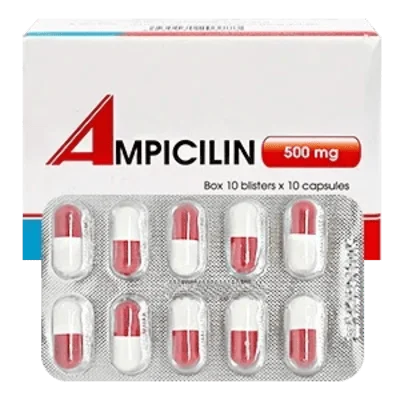
Ampicillin is a penicillin-class antibiotic for people with susceptible bacterial infections. It is used for infections affecting areas such as the respiratory and urinary tracts, bloodstream, and heart valves. It works by blocking bacterial cell-wall formation, causing susceptible bacteria to die.
Ampicillin is a penicillin-class antibiotic used for susceptible bacterial infections, including respiratory, urinary, gastrointestinal, bloodstream, and heart-valve infections. The oral capsule works by blocking bacterial cell-wall formation, which causes susceptible bacteria to die.
Ampicillin is the active antibiotic ingredient in this product. It belongs to the penicillin class and works by blocking bacterial cell-wall formation, causing susceptible bacteria to die. The exact product details are stated on the pack and leaflet.
Ampicillin is supplied on this page as an oral capsule; the dose is stated on the pack — follow the leaflet. The exact daily schedule depends on the infection, age, kidney function, bacterial susceptibility, and the prescription issued for the individual patient.
Use involves the following principles:
Ampicillin for Injection, USP contains ampicillin sodium and is administered by trained clinical staff through an intravenous or intramuscular route. Sterile Water for Injection, USP may be used as a diluent, and Bacteriostatic Water for Injection, USP may be used in circumstances permitted by the applicable product instructions and clinical protocol. Reconstitution, concentration, stability, and administration depend on the specific injectable presentation.
The oral capsule and injectable ampicillin are not interchangeable on a milligram-for-milligram basis without clinical assessment. A severe infection, vomiting, impaired intestinal absorption, or suspected meningitis may require hospital treatment.
Ampicillin belongs to the penicillin group of beta-lactam antibiotics. It is bactericidal, which means it kills susceptible bacteria rather than merely slowing their growth. Its antibacterial activity depends on the organism’s susceptibility and its ability to reach the infected tissue.
Ampicillin binds to penicillin-binding proteins, also called PBPs. These proteins help bacteria build and maintain their cell walls. When ampicillin blocks PBPs, the bacterial wall becomes structurally weak and can rupture during growth.
The mechanism can be summarised in three steps:
Resistance can occur when bacteria produce beta-lactamase enzymes, alter their PBPs, or reduce antibiotic entry. Amoxicillin has a related mechanism and belongs to the same aminopenicillin family, though the two medicines differ in absorption, dosing patterns, and clinical selection.
The microbiology section of the FDA prescribing information describes ampicillin sodium as active against selected Gram-positive and Gram-negative organisms when laboratory testing confirms susceptibility [1].
Ampicillin treats infections caused by bacteria that remain susceptible to aminopenicillin antibiotics. The oral capsule is used when treatment through the digestive tract is appropriate. Hospital formulations may be used when infection is severe or oral treatment cannot provide adequate therapy.
Common clinical indications include:
Ampicillin for Injection, USP is used in hospital care for serious infections requiring parenteral treatment. Respiratory tract infections, bacterial meningitis, septicemia, endocarditis, urinary tract infections, and gastrointestinal infections may require intravenous or intramuscular therapy rather than oral capsules, depending on the patient’s condition and bacterial susceptibility.
A urinary infection may be treated with an oral capsule when the organism is susceptible and the patient is clinically stable. Septicemia, meningitis, and endocarditis require a different level of assessment because bacteria may be affecting the bloodstream, central nervous system, or cardiac valves.
The choice of treatment depends on culture results, kidney function, infection site, severity, allergies, and local resistance patterns. Ampicillin should not be used for viral illnesses such as influenza or most uncomplicated colds.
Ampicillin and amoxicillin are related aminopenicillin antibiotics. The choice between them depends on the organism, infection site, absorption, dosing schedule, previous treatment, local resistance, and patient-specific factors.
| Option | Main pharmacological relationship | Practical distinction |
|---|---|---|
| Ampicillin | Oral aminopenicillin and injectable penicillin option | Useful for susceptible organisms; oral absorption is affected by food |
| Amoxicillin or amoxycillin | Closely related aminopenicillin | Often selected when a convenient oral schedule or more predictable absorption is preferred |
| Bacampicillin, pivampicillin, or talampicillin | Prodrug derivatives related to ampicillin | Converted in the body to active antibacterial compounds where available |
Epicillin and cyclacillin are structurally related penicillin antibiotics, while amoxicillin is the closest commonly discussed oral alternative. Bacampicillin, pivampicillin, and talampicillin were developed as prodrugs to improve oral delivery of ampicillin-like therapy in settings where those medicines are licensed.
Ampicillin is not automatically the best choice for every infection. Amoxicillin may be selected when oral absorption and dosing convenience are priorities, while injectable ampicillin may be selected for serious infections requiring hospital care. Culture and susceptibility testing can change the preferred antibiotic after treatment starts.
Ampicillin is not suitable for people with a previous severe immediate hypersensitivity reaction to ampicillin, penicillin, or a closely related beta-lactam. A history of anaphylaxis, angioedema, or severe breathing difficulty after a penicillin requires special caution and may rule out treatment.
Extra clinical assessment is needed in these situations:
A widespread rash is more common when ampicillin is given during certain viral illnesses, including infectious mononucleosis. Such a rash does not always represent classic IgE-mediated anaphylaxis, but it still requires medical review.
Kidney impairment may require a longer interval between doses. This is especially relevant because ampicillin is cleared substantially through the kidneys.
This medicine may not be suitable for you if you have ever had a severe reaction to penicillin or a related beta-lactam antibiotic, including anaphylaxis, facial swelling, or serious breathing difficulty. Tell your clinician if you have kidney problems, previous antibiotic-associated colitis, infectious mononucleosis, severe drug-related skin reactions, are pregnant or breastfeeding, or take probenecid or allopurinol.
Ampicillin can cause allergic reactions, gastrointestinal effects, and antibiotic-associated complications. The most important history to establish before treatment is a previous reaction to penicillin, ampicillin, amoxicillin, or another beta-lactam antibiotic.
Possible reactions include:
Anaphylaxis can cause facial or throat swelling, wheezing, faintness, low blood pressure, or difficulty breathing. It requires immediate emergency treatment, with epinephrine as the first-line medicine in appropriate clinical protocols.
Clostridium difficile can cause watery or bloody diarrhoea during treatment or weeks afterward. Severe abdominal pain, fever, dehydration, or persistent diarrhoea requires urgent medical assessment rather than self-treatment with an antidiarrhoeal medicine. The FDA label describes antibiotic-associated colitis as a serious complication that can occur after antibacterial therapy [2].
Several practical errors can reduce treatment success or increase avoidable harm:
One detail patients often miss is the timing of food. The issue is not that every meal makes the medicine unsafe; food can reduce absorption and make exposure less predictable.
Another overlooked point is delayed diarrhoea. Antibiotic-associated colitis can begin after the final capsule, so severe or persistent diarrhoea still needs assessment even when the infection itself seems resolved.
In clinical practice, physicians usually judge ampicillin by three questions: Is the infection bacterial, is the organism susceptible, and can the medicine reach the infected site at a sufficient concentration?
A doctor may change treatment after a culture identifies resistance. The same change may occur if the patient develops an allergic reaction, persistent fever, worsening pain, or severe diarrhoea. Lack of improvement does not always mean the dose should simply be increased; the diagnosis, organism, absorption, and infection site may need reassessment.
Consistency matters because irregular antibiotic exposure can leave bacteria under-treated. Physicians also consider kidney function before selecting the interval, especially in older adults or people receiving dialysis.
Ampicillin treats susceptible bacterial infections affecting the respiratory tract, urinary tract, gastrointestinal tract, bloodstream, heart valves, and central nervous system. The choice depends on culture results and the ability of the medicine to reach the infected site. SAHPRA and WHO antimicrobial stewardship principles support using antibiotics for confirmed or strongly suspected bacterial disease rather than viral symptoms. These principles remain relevant to prescribing decisions in 2026.
Ampicillin blocks penicillin-binding proteins that bacteria need to construct a stable cell wall. The weakened wall can rupture as the bacterium grows, producing a bactericidal effect against susceptible organisms. The EMA described beta-lactam antibiotics through this cell-wall mechanism in 2022 pharmacology materials. The response still depends on bacterial susceptibility and resistance mechanisms.
Food may reduce absorption of oral ampicillin, so prescribers commonly specify administration on an empty stomach. The exact timing should follow the prescribed regimen because the appropriate interval may vary with the formulation and infection. Clinical pharmacology references from the FDA (2024) and SAHPRA (2024) describe food as a factor affecting oral exposure. Taking the capsule with water can make swallowing easier.
A missed dose should not be replaced with two doses together. If the next scheduled dose is close, the missed dose is generally skipped and the regular schedule is resumed. MHRA guidance published in 2024 supports avoiding double dosing after a missed antibiotic dose. Vomiting soon after administration requires a separate decision based on the time since swallowing the capsule.
Ampicillin can cause mild gastrointestinal upset, including loose stools. Persistent, severe, watery, or bloody diarrhoea can indicate Clostridium difficile associated disease and needs prompt medical assessment. WHO antibiotic safety materials published in 2023 identify antibiotic-associated diarrhoea as a clinically relevant complication requiring attention. Avoid self-treating severe diarrhoea with loperamide before an assessment.
Ampicillin can be prescribed during breastfeeding when treatment is clinically necessary. Small quantities may enter breast milk, and the infant should be observed for diarrhoea, thrush, rash, or feeding changes. LactMed and established clinical pharmacology references published in 2024 describe penicillins as generally compatible with breastfeeding when appropriately prescribed. A paediatric review is needed if symptoms are persistent or severe.
Your order will be securely packed and shipped within 24 hours. This is exactly what your package will look like (images of an actual item sent). It has the size and look of a regular private letter (24x11x0.7 cm) and its contents cannot be seen.
The urinary symptoms eased after two days, but I still finished the prescribed course. Mild nausea was better when I drank water with each capsule.
The chest infection improved slowly. I had loose stools near the end, so the clinic checked me rather than telling me to keep taking extra doses.
I took a capsule after breakfast each morning at first and was unsure why the result was poor. The prescriber explained the food timing and changed the schedule.
The medicine helped, but my kidney function meant the interval had to be adjusted. I had no serious side effects after the schedule was corrected.