Description
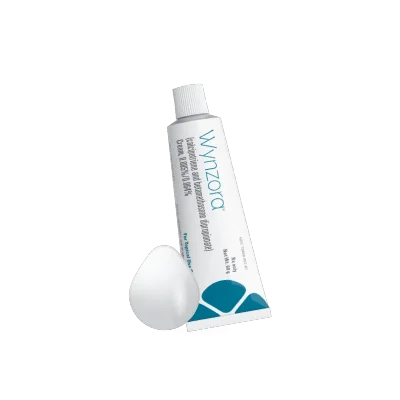
Plaque psoriasis is a chronic inflammatory skin condition that produces raised, scaly plaques. It commonly affects the elbows, knees, scalp, trunk, and other areas, although the pattern differs between patients. Wynzora cream is applied directly to affected skin to control local inflammation and abnormal epidermal growth.
Wynzora contains two active substances with complementary actions. Calcipotriol is a vitamin D analogue that helps normalise skin-cell production. Betamethasone dipropionate is a potent topical corticosteroid that suppresses inflammatory activity.
Composition
Wynzora’s formulation combines calcipotriol and betamethasone dipropionate in one topical preparation. Each component works through a different biological pathway, allowing one cream to address excessive keratinocyte activity and inflammation together.[2]
Role of Calcipotriol and Betamethasone
PAD Technology and Topical Delivery
Wynzora uses PAD Technology, a formulation approach designed to help distribute the active substances across the skin surface and support their delivery into plaque tissue. The cream vehicle is intended to feel less greasy than some older ointment-based preparations, which may make regular application easier for some patients.
Dosage and usage
Wynzora is a topical cream for use on psoriasis-affected skin. Use the prescribed amount and frequency, and apply it only to the areas identified for treatment.
- Clean and dry the affected skin gently before application.
- Spread a thin, even layer over the plaque.
- Avoid the eyes, eyelids, mouth, and other mucous membranes.
- Do not apply it to the face, groin, or skin folds unless a prescriber has specifically instructed you to do so.
- Do not cover treated areas with airtight dressings unless this has been prescribed.
- Wash your hands after applying the cream.
- Use the cream for the prescribed treatment period rather than extending treatment because plaques remain visible.
- If an application is missed, apply it when remembered unless the next scheduled application is near. Do not apply a double amount.
The treatment schedule depends on the body site, plaque severity, previous corticosteroid exposure, and the prescriber’s plan. The amount required for a small elbow plaque differs from the amount required for several large plaques. A fingertip-unit method may help estimate topical quantities, but the prescribed instructions take priority. The prescriber should reassess the response before extending or repeating treatment. Changes in plaque thickness, irritation, or the treated area can affect the next plan.
Avoid applying moisturiser immediately over the cream if it causes the product to spread beyond the intended area. If moisturiser is needed, allow the treatment to settle first and use separate application times where possible.
Do not use kitchen measuring spoons or estimate a large amount by squeezing a long ribbon of cream. A thin film is the target; visible excess left on the skin usually represents avoidable waste and added corticosteroid exposure.
Wynzora should not be used as a general body moisturiser. It is a medicinal cream for psoriatic lesions.
How it works
Calcipotriol acts on vitamin D receptors in skin cells. Psoriatic plaques develop partly because keratinocytes mature and multiply too quickly. Calcipotriol helps restore a more normal pattern of differentiation and proliferation.
Betamethasone dipropionate binds to glucocorticoid receptors in inflammatory cells. This reduces the release of inflammatory mediators and can ease redness, swelling, itching, and plaque thickness.
The corticosteroid component can produce quicker relief of inflammatory symptoms. Calcipotriol supports control of the abnormal skin-cell cycle that contributes to persistent plaques.
Indications
The product is intended for adult plaque psoriasis under a prescriber’s direction.
Comparison
Wynzora is a topical combination treatment: calcipotriol helps normalise skin-cell production while betamethasone dipropionate suppresses inflammation, unlike a single-ingredient topical approach that targets only one of these processes.
Contraindications
- You have a known allergy to calcipotriol, betamethasone dipropionate, or any component of the cream.
- You have untreated bacterial, viral, fungal, or parasitic skin infection in the proposed treatment area.
- You have rosacea, acne, perioral dermatitis, or another condition for which a potent corticosteroid may worsen the skin.
- You have erythrodermic or pustular psoriasis unless a specialist has specifically prescribed this treatment.
- You plan to apply it to the face, genitals, or skin folds without explicit medical direction.
- You have a disorder of calcium metabolism or a history of unusually high calcium levels.
- You are already using substantial amounts of another calcipotriol-containing product.
- You intend to cover the treated area with an airtight dressing without clinical instruction.
The FDA prescribing information describes these risks and the need to limit treatment according to the approved regimen.[4]
When this is not for you
This medication is not for you if you have an allergy to either active ingredient, an untreated skin infection, or a skin condition such as rosacea or acne that a potent corticosteroid could worsen. It may also be unsuitable if you have erythrodermic or pustular psoriasis, problems with calcium levels, or are already using a substantial amount of another calcipotriol product. Do not use it on the face, genitals, skin folds, or under airtight dressings unless a clinician has specifically told you to do so.
Tell the prescriber about pregnancy, planned pregnancy, or breastfeeding before treatment. Avoid applying the cream to the breast immediately before breastfeeding.
Side effects
Most adverse effects associated with Wynzora are local skin reactions, though clinical evaluations also recorded some systemic symptoms. Reported reactions can include itching, rash, hives, irritation, and application-site discomfort. Upper respiratory infection and headache were also reported events in clinical studies, although not every event in a study is necessarily caused by the medicine.[3]
Possible effects include:
- Burning, stinging, itching, or irritation at the application site.
- Worsening redness or a new rash.
- Hives or other signs of hypersensitivity.
- Folliculitis or inflamed hair follicles.
- Headache.
- Upper respiratory symptoms.
- Skin thinning after excessive or prolonged corticosteroid exposure.
- Stretch marks, visible small blood vessels, or changes in skin colour with repeated steroid use.
Topical corticosteroids can be absorbed through the skin. Absorption rises when large areas are treated, skin is inflamed or damaged, airtight coverings are used, or treatment continues for longer than prescribed. Excessive exposure may affect the adrenal system or alter calcium balance, especially when a vitamin D analogue is used over extensive areas.
A small amount of brief stinging can occur on inflamed skin, but persistent burning, marked swelling, or rapidly worsening redness needs prompt clinical assessment rather than repeated application.
Do not place the cream in the eyes. Accidental eye exposure can cause irritation, and repeated corticosteroid exposure near the eye may increase the risk of ocular complications.
Common mistakes
Several application habits can reduce benefit or increase adverse effects:
- Applying a thick layer in the belief that more cream works faster.
- Using the cream on the face, groin, or armpits without specific instruction.
- Covering plaques with plastic wrap or airtight clothing.
- Continuing daily use for months without reassessment.
- Applying it to every itchy patch without confirming that the patch is psoriasis.
- Combining it with another potent steroid on the same area.
- Stopping after one application because the plaque remains visible.
- Applying it immediately before swimming or bathing, which can remove part of the treatment.
- Rubbing aggressively over cracked skin.
- Forgetting to wash hands after treatment and then touching the eyes.
One practical issue is transfer. Cream left on the fingertips can reach the eyelids or lips unintentionally, especially when treatment is applied before preparing food or handling contact lenses.
Another common mistake is treating itch alone rather than the diagnosed plaque. Itch can come from infection, eczema, allergy, or irritation. More corticosteroid is not the correct answer for every itchy lesion.
What doctors say
In clinical practice, physicians usually judge topical psoriasis treatment by plaque thickness, scaling, redness, itching, and the percentage of skin involved. A cream may be working even before the plaque has disappeared completely, because reduced scaling and less itching can occur ahead of full visual clearance.
Doctors also look for treatment patterns that suggest a different diagnosis or an infection. A sudden change in appearance, painful pustules, fever, or rapidly spreading redness should not be managed by simply applying more cream.
The combination approach is useful when inflammation and excessive scaling occur together. Its limitations are equally clear: a potent corticosteroid is not intended for unrestricted long-term use, and a topical product may be insufficient when psoriasis covers extensive areas or affects sensitive sites.
A prescriber may alter the schedule, introduce a steroid-free maintenance option, or choose another psoriasis treatment after examining the response. Patients should not extend the course independently because residual plaques remain.