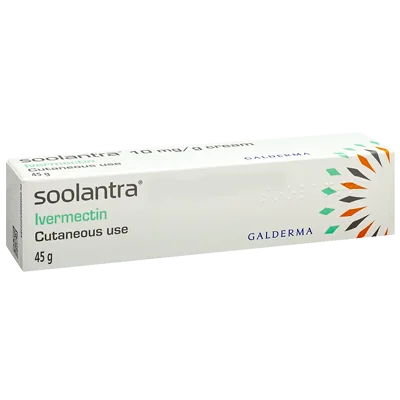
Description
Soolantra cream is used for inflammatory rosacea, a chronic facial skin disorder that can cause persistent redness, papules, pustules, burning, and sensitivity. The cream is intended for adults whose rosacea includes raised inflammatory lesions rather than redness alone.
The active ingredient is ivermectin. The product is supplied as a cream in tubes for cutaneous use.
Composition
Soolantra contains ivermectin in a cream base. The formulation also contains inactive excipients that give the cream its texture, stability, and spreadability.
The listed excipients include:
- Stearyl alcohol
- Cetyl alcohol
- Propylene glycol
- Methyl-4-hydroxybenzoate
Stearyl alcohol and cetyl alcohol are fatty alcohols used to support the cream base. They are different from drying alcohols such as ethanol, although sensitive skin can still react to any cosmetic or pharmaceutical ingredient.
Propylene glycol can cause irritation or contact dermatitis in susceptible individuals. Methyl-4-hydroxybenzoate is a preservative, also known as methylparaben, and may trigger a reaction in people with a known sensitivity to preservatives.
If you have previously developed a rash from propylene glycol, parabens, fatty alcohols, or medicated creams, mention the specific ingredient before starting treatment rather than waiting for a widespread reaction.
Dosage and usage
Apply Soolantra once daily to the affected areas of the face. The usual treatment areas are the forehead, nose, chin, and both cheeks when rosacea lesions are present there.
- Wash the face with a mild cleanser and pat the skin dry.
- Apply a small amount as a thin layer to each affected facial area.
- Spread the cream gently without vigorous rubbing.
- Avoid the eyelids, eyes, lips, mouth, and inside of the nostrils.
- Wash the hands after application unless the hands are being treated.
- Use the cream at approximately the same time each day.
- Allow the cream to absorb before applying other facial products.
The product is for external use. Do not apply it to broken, infected, or severely inflamed skin unless a prescriber has specifically directed this.
Treatment usually continues for several weeks. Clinical studies assessed improvement during ongoing daily use, and some patients need continued treatment to maintain control. If a dose is missed, apply the next dose at the usual time. Do not apply extra cream to compensate.
More cream does not produce faster improvement. A thin, even layer is sufficient; excess product mainly increases residue and the chance of irritation.
Avoid applying strong exfoliating acids, abrasive scrubs, alcohol-heavy toners, or retinoid products at the same time unless they form part of an agreed skincare plan. A bland moisturiser may be used after Soolantra has absorbed if dryness develops.
Soolantra should not be used on children unless a specialist has prescribed it for that specific patient. Keep the tube closed between applications and prevent contact between the applicator opening and the skin.
No routine food interaction is expected with topical Soolantra. Alcohol does not create a recognised direct interaction with the cream, although alcohol can trigger rosacea flushing in some patients.
Do not apply the cream to the breast immediately before feeding. If treatment is needed on breast skin, remove residual cream before the infant feeds.
How it works
Ivermectin belongs to the avermectin class of compounds. In topical rosacea treatment, it has both anti-inflammatory and antiparasitic properties. Rosacea is not caused by one single mechanism, but inflammatory immune activity and increased numbers of skin-associated Demodex mites may contribute to lesions in some patients.
Ivermectin acts on glutamate-gated chloride channels in parasites, leading to paralysis and death of the organism. In human skin, the topical formulation also appears to reduce inflammatory signalling associated with rosacea. The result is a gradual reduction in papules and pustules for many treated adults.
Indications
Soolantra cream is used for inflammatory rosacea, a chronic facial skin disorder that can cause persistent redness, papules, pustules, burning, and sensitivity. The cream is intended for adults whose rosacea includes raised inflammatory lesions rather than redness alone.
Soolantra focuses on the inflammatory bumps and pustules associated with rosacea. It does not function as a general moisturiser or instant redness-reducing cosmetic.
Comparison
Topical ivermectin, azelaic acid, and metronidazole are used for inflammatory rosacea, but they act through different pharmacological pathways. Ivermectin may be selected when papules and pustules are prominent or when a mite-related inflammatory contribution is suspected.
Azelaic acid may suit patients who need an alternative anti-inflammatory topical treatment, although tingling and irritation are common during early use. Metronidazole is another established topical option for inflammatory lesions. Oral antibiotics may be considered when disease is more extensive, persistent, or associated with eye involvement, but they bring systemic adverse-effect considerations.
When this is not for you
Soolantra may not be suitable if you have had a serious allergic reaction to ivermectin or any ingredient in the cream. Do not use it on broken or infected skin, inside the eyes, on the lips, or inside the nose or mouth. Seek medical advice before using it if your facial lesions have not been assessed as rosacea, or if you have eye pain, visual changes, or light sensitivity. Pregnancy and breastfeeding require an individual risk assessment.
Side effects
Topical ivermectin is often tolerated well, but treated skin can react during the first weeks. Reported reactions include burning, stinging, irritation, itching, dryness, and worsening of rosacea symptoms. These effects may be mild and temporary, but persistent or severe inflammation needs assessment.
Clinical trial data identified application-site burning and irritation among recognised adverse reactions. The FDA prescribing information also warns that some patients may experience skin reactions during treatment [1].
Possible reactions include:
- Burning or stinging after application
- Itching or increased sensitivity
- Dry or flaky skin
- Redness at the application site
- Contact dermatitis
- Temporary worsening of inflammatory lesions
- Swelling of the eyelids or facial skin
- A rash suggesting sensitivity to an ingredient
A small amount of warmth or stinging can occur when the cream is first introduced. Stop applying the product and obtain urgent medical attention if facial swelling, breathing difficulty, widespread hives, blistering, or severe eye symptoms develop.
If dryness appears, simplify the routine for several days: gentle cleanser, Soolantra, and a fragrance-free moisturiser. Adding several new products at once makes the trigger difficult to identify.
Clinical improvement can be uneven. One cheek may settle before the nose or chin, and lesions may fluctuate during the first part of treatment. Lack of immediate change does not prove that the cream is unsuitable, but marked deterioration requires review.
Common mistakes
Several routine mistakes can make treatment appear ineffective or cause unnecessary irritation:
- Applying the cream several times daily because lesions remain visible
- Covering the entire face with a thick layer
- Using it on the eyelids or directly beside the eyes
- Scrubbing the face before application
- Stopping after a few days because the skin has not changed
- Adding exfoliating acids, retinoids, or fragranced products at the same time
- Applying the cream to acne or another rash without a confirmed diagnosis
- Forgetting that sun exposure and heat may continue to trigger flushing
- Sharing the tube with another person
- Using the cream after its appearance, smell, or texture has changed
One subtle mistake is applying moisturiser, sunscreen, and makeup immediately after the cream while rubbing the face repeatedly. This can remove part of the treatment and worsen friction-related redness. Let the cream settle first, then press other products onto the skin rather than massaging aggressively.
Another is judging progress only by colour. Soolantra mainly targets inflammatory lesions. Fewer bumps and pustules may represent a meaningful response even when background redness remains.
What doctors say
In clinical practice, dermatologists usually assess the type of rosacea before selecting a topical medicine. Soolantra is most relevant when raised inflammatory lesions are present. It is less likely to address isolated flushing or established facial thread veins.
Doctors also look for conditions that can resemble rosacea, including acneiform eruptions, seborrhoeic dermatitis, allergic dermatitis, and perioral dermatitis. The treatment plan may change if the diagnosis changes.
The expected response is gradual. Phase 3 trials reported greater reductions in inflammatory lesions with ivermectin cream than with vehicle cream, with assessments made over repeated weeks of treatment [2]. A physician may continue treatment when improvement is present but incomplete, provided the cream is tolerated.
A practical prescribing conversation includes skincare. Daily sun protection, a gentle cleanser, and avoidance of known triggers can reduce the number of variables affecting the skin. Soolantra is one part of management rather than a replacement for trigger control.