Description
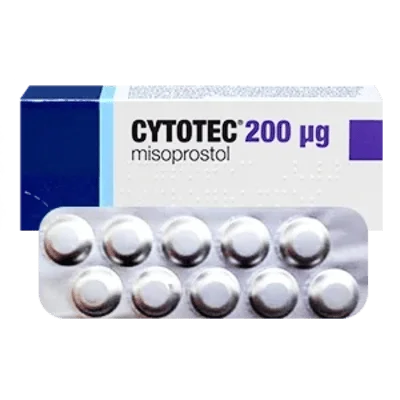
Cytotec contains misoprostol 200 micrograms in tablet form. It is a prostaglandin medicine used for specific stomach-protection and reproductive-health indications under a clinician’s direction.
Composition
Cytotec tablets contain misoprostol 200 micrograms. Misoprostol is a synthetic prostaglandin E1 analogue. Prostaglandins are signalling substances that influence stomach mucus production, acid secretion, cervical softening, and uterine muscle activity.
Dosage and usage
The correct Cytotec regimen depends on the indication. The 200-microgram tablet strength is fixed, but the number of tablets, route, timing, and treatment duration vary substantially between ulcer prevention, miscarriage care, abortion care, labour induction, and postpartum bleeding.
Use only the regimen prescribed for the diagnosed condition.
- Take the medicine by the route specified by the treating clinician.
- Use the prescribed number of tablets at the prescribed intervals.
- Do not combine an ulcer-prevention regimen with a reproductive-health regimen.
- Do not take extra tablets because cramping or bleeding has not started.
- Do not repeat a dose early without a specific clinical instruction.
- If vomiting occurs soon after an oral dose, obtain medical advice before repeating it.
- If a dose is missed during ulcer prevention, take it when remembered unless the next dose is close; do not double the dose.
- Keep a written record of the time and number of tablets used when a multi-dose reproductive-health regimen has been prescribed.
For stomach protection, Cytotec is commonly taken with food and at bedtime, according to the prescribed schedule. Taking it with food can reduce gastrointestinal discomfort. Reproductive-health use follows different instructions, so the stomach-protection schedule must not be used for that purpose.
Do not split the decision-making from the diagnosis. Abdominal pain, pregnancy loss, heavy bleeding, or suspected ectopic pregnancy can require different treatment, even when the symptoms seem similar.
The World Health Organization recommends indication-specific misoprostol regimens in its abortion-care guidance, with changes according to gestational age, route, and whether mifepristone is also used [2]. Those regimens should be followed as a complete clinical plan rather than adapted tablet by tablet.
How it works
Misoprostol acts on prostaglandin receptors in the stomach and reproductive tract. In the stomach, it increases protective mucus and bicarbonate while reducing acid secretion. This helps defend the lining against injury from non-steroidal anti-inflammatory drugs, which can reduce natural prostaglandin production.
In the uterus and cervix, misoprostol promotes cervical ripening and uterine contractions. Cervical ripening means that the cervix becomes softer and more prepared to open. The strength of the response depends on the dose, route, pregnancy stage, and individual physiology.
The United States Food and Drug Administration approved Cytotec for reducing the risk of gastric ulcers caused by non-steroidal anti-inflammatory drugs [1]. Reproductive-health protocols are based on clinical guidelines and evidence that specify different regimens for different situations.
Misoprostol is not a hormonal contraceptive. It does not prevent future pregnancy, and it does not treat infections. It also does not provide protection against sexually transmitted infections.
Indications
The medicine has two clinically distinct roles:
- It can reduce the risk of stomach and duodenal ulcers associated with non-steroidal anti-inflammatory drugs, including medicines such as diclofenac, naproxen, and ibuprofen.
- It can be used in reproductive care to soften the cervix, stimulate uterine contractions, manage miscarriage, support abortion care, or reduce heavy bleeding after childbirth, depending on the clinical situation.
These uses require different doses, routes, timings, and follow-up arrangements. A regimen suitable for ulcer prevention must not be transferred to reproductive care.
Misoprostol is absorbed after oral administration and is rapidly converted to its active metabolite, misoprostol acid. Its pharmacological effects can begin relatively quickly, while cramping and bleeding may continue for several hours or longer depending on the indication.
Comparison
Misoprostol differs from other approaches by its target and clinical purpose. The table compares treatment categories rather than commercial products.
For NSAID-related ulcer risk, acid suppression may be selected when misoprostol’s diarrhoea or cramping is unacceptable. Misoprostol may still be considered when prostaglandin replacement is clinically appropriate.
For abortion care, misoprostol alone and mifepristone followed by misoprostol are separate clinical approaches. The combination can have different success rates and timing from misoprostol alone. The choice depends on gestational age, local protocols, medical history, and access to follow-up.
For labour induction, clinicians may use pharmacological cervical-ripening methods or mechanical methods. Misoprostol is not suitable for every pregnancy, and prior uterine surgery can change the risk assessment.
Contraindications
Cytotec is not suitable for everyone.
- You have a known allergy to misoprostol, prostaglandins, or any tablet ingredient.
- You are pregnant and the intended treatment is ulcer prevention.
- You have unexplained heavy vaginal bleeding or severe pelvic pain that has not been assessed.
- An ectopic pregnancy is possible and has not been excluded.
- You have a history of caesarean section or other uterine surgery and are considering labour induction without specialist assessment.
- You have a serious condition that makes pregnancy or uterine contractions dangerous.
- You are taking the medicine for a condition that has not been diagnosed.
People with inflammatory bowel disease may experience worsening diarrhoea or abdominal symptoms. Those with dehydration, kidney disease, or severe gastrointestinal illness may need tailored monitoring.
Drug interactions depend on the treatment plan. Antacids containing magnesium can worsen diarrhoea. Non-steroidal anti-inflammatory drugs may be used with misoprostol in ulcer-prevention treatment, yet the full medicines list still needs review because the underlying gastrointestinal risk may remain.
When this is not for you
This medicine is not for you if you are pregnant and the intended treatment is ulcer prevention, if you have unexplained heavy vaginal bleeding or severe pelvic pain, or if an ectopic pregnancy is possible and has not been excluded. Tell the prescriber if you could be pregnant before receiving Cytotec for stomach protection. Misoprostol can stimulate uterine contractions and may cause pregnancy loss.
Misoprostol used during pregnancy can cause uterine contractions, miscarriage, premature birth, fetal death, or birth defects if pregnancy continues. For that reason, a pregnancy test and clinical assessment may be needed before treatment, depending on the indication.
Breastfeeding advice depends on the indication and clinical circumstances. Misoprostol acid passes into breast milk in very small amounts, but diarrhoea in a breastfed infant is possible. A clinician should provide the feeding plan when Cytotec is used after childbirth.
Side effects
Misoprostol commonly affects the gastrointestinal tract because it changes prostaglandin activity in several tissues. Possible effects include:
- Diarrhoea
- Abdominal pain or cramping
- Nausea
- Vomiting
- Flatulence
- Headache
- Dizziness
- Chills or fever
- Uterine cramping
- Vaginal bleeding when used in reproductive care
Diarrhoea is a frequent reason for stopping misoprostol used for ulcer prevention. It can appear during the first few days and may improve with continued treatment, though persistent or severe diarrhoea needs assessment.
Cramping and bleeding can be expected in some reproductive-health uses. The amount and duration depend on the indication and pregnancy stage. Severe pain, fainting, shoulder-tip pain, marked weakness, or bleeding that rapidly soaks through sanitary products needs urgent medical assessment because ectopic pregnancy, haemorrhage, or incomplete treatment may be present.
A fever can occur after misoprostol. A short-lived temperature rise may be part of the medicine’s effect, while persistent fever, worsening pelvic pain, foul-smelling discharge, or feeling progressively unwell can indicate infection.
For reproductive-health treatment, use sanitary pads rather than relying on tampons or menstrual cups when bleeding needs to be monitored. This makes the amount and speed of blood loss easier to judge.
Some people experience chills before a temperature rise. Warm clothing and fluids may help with comfort, but an ongoing high fever or severe illness requires prompt medical assessment.
The FDA prescribing information describes diarrhoea and abdominal pain among the recognised adverse effects of Cytotec [3]. Side-effect intensity does not reliably show whether treatment has worked. Mild cramping may occur without complete treatment, while strong cramping may occur with a normal response.
Common mistakes
Several errors can make Cytotec treatment less predictable or more hazardous:
- Using a stomach-ulcer schedule for reproductive-health treatment.
- Taking additional tablets because bleeding or cramping has not begun quickly.
- Assuming every route of administration is interchangeable.
- Failing to mention a possible pregnancy before treatment for NSAID-related ulcer prevention.
- Ignoring a history of caesarean section or other uterine surgery.
- Treating severe one-sided pain as an ordinary cramp.
- Waiting at home despite fainting, rapidly increasing bleeding, or severe weakness.
- Taking magnesium-containing antacids when diarrhoea is already troublesome.
- Stopping prescribed ulcer prevention after one uncomfortable dose without discussing another strategy.
- Assuming that bleeding alone confirms complete treatment.
Keep the prescriber’s emergency contact details available before starting a reproductive-health regimen. The most useful information to report is the time of each dose, the bleeding pattern, the pain location, and any measured temperature.
Do not use leftover tablets for a new pregnancy, new pain, or a different stomach problem. The clinical context determines whether misoprostol is appropriate.
What doctors say
Clinicians usually focus first on the indication, pregnancy status, gestational age when relevant, prior uterine surgery, bleeding risk, and access to urgent care. The same 200-microgram tablet can be used within very different protocols, so the tablet strength alone does not identify the correct treatment.
Doctors also explain that expected symptoms vary. Gastrointestinal use may produce diarrhoea and abdominal discomfort, while reproductive-health use may produce cramping, bleeding, chills, nausea, or fever. Absence of immediate symptoms does not always mean treatment has failed.
One practical point often missed in consultations is the importance of confirming ectopic pregnancy risk. Misoprostol does not treat an ectopic pregnancy. One-sided pelvic pain, shoulder-tip pain, fainting, or collapse requires urgent assessment.
A second clinical point concerns prior uterine surgery. Misoprostol can increase uterine activity, and labour-induction protocols differ when a uterine scar is present. The Royal College of Obstetricians and Gynaecologists and national maternity services use separate risk assessments for these situations.