Description
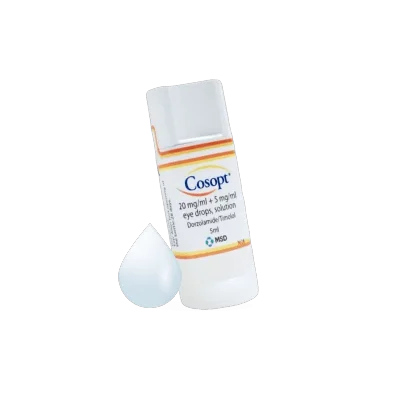
Cosopt is a prescription eye-drop solution containing dorzolamide hydrochloride and timolol maleate. It is used for adults with ocular hypertension or open-angle glaucoma when lowering eye pressure is clinically necessary. The two active ingredients reduce aqueous humour production through complementary mechanisms.
Composition
Cosopt is a sterile ophthalmic solution containing dorzolamide hydrochloride and timolol maleate. The dose is stated on the pack; follow the leaflet. The combination is also described pharmacologically as dorzolamide–timolol.
Dorzolamide belongs to the topical carbonic anhydrase inhibitor class. Timolol is a non-selective beta-adrenergic receptor blocker. Together, they reduce the formation of aqueous humour, the fluid circulating within the front part of the eye. Lower fluid production can reduce intraocular pressure and limit pressure-related stress on the optic nerve [1].
Role of Dorzolamide Hydrochloride
Dorzolamide hydrochloride inhibits carbonic anhydrase II in the ciliary processes of the eye. This enzyme contributes to bicarbonate formation and fluid secretion. Inhibition reduces the movement of sodium and fluid into the posterior chamber, lowering aqueous humour production.
The dorzolamide component acts locally after installation, though some systemic absorption can occur through the conjunctiva and nasolacrimal drainage system. A bitter taste after instillation is possible because some of the drop may reach the throat through the tear duct.
Role of Timolol Maleate
Timolol maleate blocks beta-adrenergic stimulation in the ciliary body. This decreases aqueous humour formation without directly constricting the pupil or changing accommodation in the way some older glaucoma treatments can.
Timolol can enter the systemic circulation. Its beta-blocking action may affect the heart and airways, which explains the need for caution in people with asthma, chronic obstructive pulmonary disease, slow heart rate, or certain conduction disorders.
Dosage and usage
The usual adult dose is one drop of Cosopt in the affected eye or eyes twice daily. If another topical glaucoma medicine is being replaced, the previous treatment is generally stopped and Cosopt is started according to the prescriber’s schedule.
- Wash and dry the hands before use.
- Tilt the head back and pull the lower eyelid down gently.
- Hold the bottle above the eye without touching the eye, eyelid, or eyelashes.
- Instil one drop into the conjunctival sac.
- Close the eye gently rather than blinking repeatedly.
- Apply gentle pressure at the inner corner of the closed eye for about two minutes.
- Replace the cap promptly after use.
- Leave at least 10 minutes between Cosopt and another ophthalmic medicine.
One drop is enough for the eye. Adding extra drops does not improve pressure control and increases the amount that can drain into the nose. Contact-lens wearers should remove lenses before applying the solution and follow the prescriber’s instructions about when to replace them.
If a dose is missed, it should be used when remembered unless the next scheduled dose is close. In that situation, the missed dose is skipped. Two doses should not be applied together.
A common practical error is aiming the bottle at the coloured part of the eye. Aim for the pocket formed by the lower eyelid instead, because touching the cornea can cause irritation and contaminate the bottle tip.
Cosopt is supplied here as eye drops in a bottle containing 5 ml. The solution should not be transferred to another container. Storage should follow the product’s approved instructions, and excessive heat or freezing should be avoided.
How it works
Dorzolamide hydrochloride inhibits carbonic anhydrase II in the ciliary processes of the eye, reducing bicarbonate formation and fluid secretion. This decreases the movement of sodium and fluid into the posterior chamber and lowers aqueous humour production.
Timolol maleate blocks beta-adrenergic stimulation in the ciliary body. This decreases aqueous humour formation without directly constricting the pupil or changing accommodation.
Indications
Cosopt is used to lower raised intraocular pressure in adults with open-angle glaucoma or ocular hypertension. It is commonly considered when a topical beta-blocker alone does not reduce pressure sufficiently, or when a patient is already receiving both mechanisms separately and a combination drop is clinically suitable.
Glaucoma can damage the optic nerve gradually, often without pain or early changes in vision. Ocular hypertension means that pressure is elevated without established optic-nerve damage, although some people with ocular hypertension later develop glaucoma. The Ocular Hypertension Treatment Study helped establish the importance of assessing individual risk rather than treating pressure as an isolated number [2].
Cosopt does not restore damaged optic-nerve fibres. Its purpose is pressure control, which may help slow further damage when the treatment target is appropriate. The target pressure differs between patients because it depends on baseline pressure, optic-nerve appearance, visual-field findings, corneal thickness, age, and the stage of glaucoma.
A patient with ocular hypertension may receive a different pressure target from someone with established visual-field loss. Ophthalmology follow-up remains necessary even when vision feels unchanged.
Comparison
Cosopt combines two active mechanisms in one bottle. Other glaucoma strategies may use a single mechanism, a different combination, laser treatment, or surgery depending on the pressure target and optic-nerve risk.
The choice depends on the patient’s diagnosis, target pressure, ocular surface, cardiovascular history, respiratory history, previous treatment response, and ability to use drops consistently. Cosopt can reduce the number of bottles required when both components are appropriate, though a combination bottle does not remove the need for regular review.
Patients with asthma or significant bradycardia may require a different pressure-lowering strategy because of the timolol component. People with marked ocular-surface irritation may also need an adjustment in formulation or treatment plan.
Contraindications
Cosopt is not suitable for everyone. It should not be used in people with:
- Bronchial asthma or a history of asthma.
- Severe chronic obstructive pulmonary disease or significant bronchospasm.
- Sinus bradycardia.
- Second- or third-degree atrioventricular block without an appropriate pacemaker.
- Overt cardiac failure or cardiogenic shock.
- Known hypersensitivity to dorzolamide, timolol, sulfonamides, or another component.
- Previous serious reaction to an ophthalmic beta-blocker.
Important interactions include oral or intravenous beta-blockers, calcium-channel blockers, antiarrhythmics, cardiac glycosides, clonidine, and medicines that lower blood pressure. Combining these treatments can increase the risk of bradycardia, hypotension, conduction problems, or heart failure. Carbonic anhydrase inhibitors taken by mouth may also increase the risk of metabolic or electrolyte-related adverse effects.
Cosopt may affect the response to anaesthetic medicines. Patients scheduled for surgery should ensure that the anaesthetist knows they use ophthalmic timolol.
When this is not for you
This may not be suitable for you if you have asthma, serious breathing problems, a very slow pulse, certain heart-block conditions, heart failure, or a serious allergy to dorzolamide, timolol, sulfonamides, or similar eye drops. Tell your prescriber if you have diabetes, thyroid disease, circulation problems, low blood pressure, kidney or liver disease, myasthenia gravis, or previous eye surgery. Seek immediate medical help for facial swelling, a blistering rash, fever, difficulty breathing, fainting, or a very slow heartbeat.
Side effects
Cosopt can cause local eye reactions and systemic beta-blocker effects. The product information describes ocular irritation, burning or stinging, blurred vision, tearing, conjunctival changes, superficial punctate keratitis, and eyelid or corneal symptoms among possible reactions. The exact experience varies between patients.
Dorzolamide may cause a bitter taste, nausea, headache, or fatigue. Timolol can produce systemic beta-blockade despite being applied to the eye. Possible effects include bradycardia, hypotension, faintness, worsening heart failure, bronchospasm, sleep disturbance, or cold hands and feet.
Rare but serious reactions include severe breathing difficulty, fainting, marked slowing of the heartbeat, swelling of the face or throat, widespread rash, or signs of a severe allergic reaction. Sudden eye pain, a rapid decline in vision, pronounced light sensitivity, or a new visual field defect also requires urgent ophthalmic assessment.
Some patients notice short-lived blurred vision immediately after the drop. Driving or operating machinery should wait until vision is clear. The bottle should not be shared, even when another person has similar eye-pressure treatment.
If the drop stings, keep the eye gently closed for two minutes instead of rinsing it out. Persistent burning, eyelid swelling, or worsening redness may signal intolerance rather than a normal brief sensation.
A useful detail is that punctal occlusion changes exposure. Pressing the inner corner of the eye after administration can reduce nasal absorption and may lower the chance of systemic beta-blocker symptoms.
Common mistakes
Several practical mistakes can reduce the amount of medicine reaching the eye or increase adverse effects:
- Applying two or three drops because the first one was not felt.
- Touching the bottle tip to the eye or eyelashes.
- Blinking forcefully immediately after instillation.
- Skipping doses when vision seems normal.
- Using Cosopt at the same time as another eye drop without a separation interval.
- Forgetting to mention asthma, slow pulse, heart block, or beta-blocker tablets.
- Continuing contact lenses during application.
- Stopping treatment after temporary irritation without arranging a replacement plan.
- Applying a missed dose together with the next scheduled dose.
- Sharing the bottle with another person.
A surprisingly common error is confusing a drop that landed on the eyelid with a drop that entered the conjunctival sac. Repeating the dose immediately can increase exposure. If uncertain, patients should follow the prescriber’s missed-dose instructions rather than repeatedly adding drops.
Another mistake is judging treatment by comfort alone. Glaucoma can progress without pain, and a comfortable eye does not prove that pressure is controlled. The relevant evidence comes from ophthalmic measurements and optic-nerve assessment.
What doctors say
In clinical practice, ophthalmologists usually set a pressure target rather than treating a single reading in isolation. The target may be lower when the optic nerve already shows damage, when visual-field loss is progressing, or when other risk factors are present.
A doctor would usually explain that Cosopt controls pressure only while it is used consistently. Missing occasional doses can reduce control, while stopping treatment abruptly without a replacement plan may allow pressure to rise. The treatment response is assessed through measurements over time, not by whether the drops produce an immediate sensation.
The World Health Organization recognises glaucoma as a major cause of irreversible vision loss, which makes pressure monitoring and treatment adherence central to long-term care [3]. Cosopt may be useful when dual pharmacology is needed, but intolerance to timolol can make another approach more appropriate.