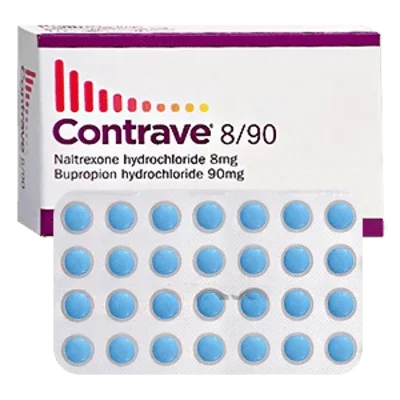
Description
Contrave is a prescription weight-management medicine combining naltrexone hydrochloride and bupropion hydrochloride. It is intended for adults with obesity, or overweight adults with weight-related conditions. Its dual action helps reduce hunger and control food cravings alongside a reduced-calorie diet and increased physical activity.
Composition
Naltrexone is an opioid receptor antagonist. It blocks opioid receptors involved in reward signalling and is also used in other settings involving opioid or alcohol dependence. Bupropion affects noradrenaline and dopamine signalling in the central nervous system and is used in certain mood and smoking-cessation treatments.
Bupropion is converted into active metabolites, including hydroxybupropion, threohydrobupropion, and erythrohydrobupropion. Naltrexone is converted mainly into 6-beta-naltrexol. These metabolites contribute to the medicine’s pharmacological activity.
Dosage and usage
Contrave tablets contain the active ingredients stated on the pack in an extended-release formulation. Follow the dose-escalation schedule stated on the pack and in the package leaflet.
Tablets are taken by mouth and swallowed whole.
Do not crush, chew, or split Contrave tablets. Altering the extended-release tablet can release the ingredients too quickly and may raise the risk of adverse effects, including seizures.
- Take the morning dose at the same time each day.
- Take the evening dose early enough to reduce the chance of insomnia.
- Do not take an extra tablet after a missed dose.
- Skip the missed dose and continue with the next planned dose.
- Do not exceed the prescribed daily amount.
- Avoid taking Contrave with a high-fat meal.
If treatment is interrupted for a prolonged period, restarting at the full maintenance dose may increase nausea and other adverse effects. The escalation schedule may need to be repeated.
An evening dose taken close to bedtime can worsen insomnia. Many patients tolerate the second dose better when it is taken with the evening meal rather than late at night.
The medicine should be stopped if the expected clinical response has not occurred after the assessment period specified by the prescriber. Continuing indefinitely without measurable benefit exposes the patient to adverse effects without a clear treatment gain.
How it works
The combination acts on two related pathways:
- Bupropion: stimulates activity in neurons involved in appetite regulation and reward processing.
- Naltrexone: reduces the reinforcing response that can follow eating, helping weaken the reward signal linked with highly palatable food.
Food cravings are not the same as physical hunger. Hunger reflects the body’s need for energy, while cravings can arise from reward, habit, stress, visual cues, or emotional triggers. Contrave targets both appetite regulation and reward-related eating behaviour. Its central nervous system effects are described in the European Medicines Agency assessment of naltrexone/bupropion prolonged-release tablets [2].
Indications
Contrave contains two active substances in extended-release tablets: naltrexone hydrochloride 8 mg and bupropion hydrochloride 90 mg per tablet. It is used with lifestyle measures for chronic weight management in adults with:
- A body mass index (BMI) of 30 or above, classified as obesity
- A BMI of 27 or above with a weight-related condition such as high blood pressure, abnormal cholesterol, or type 2 diabetes
BMI is calculated from body weight and height. It does not describe body composition perfectly, so treatment decisions also consider medical history, waist circumference, existing conditions, and previous weight-management attempts.
The combination is intended for long-term weight management rather than short-term appetite suppression. Clinical guidance and regulatory information describe Contrave as an adjunct to a reduced-calorie eating plan and regular physical activity [1].
Contrave tablets should be prescribed within a broader treatment plan. The medicine may help reduce appetite and cravings, yet it does not replace nutritional planning, movement, sleep management, or treatment of conditions that promote weight gain.
Contrave was developed by Currax Pharmaceuticals LLC.
Comparison
Saxenda contains liraglutide and is a GLP-1 receptor agonist. Ozempic contains semaglutide and is primarily indicated for type 2 diabetes in many regulatory settings, although semaglutide products may have separate weight-management indications. These medicines do not work through the same mechanism as Contrave.
Qsymia is the commercial name associated with phentermine/topiramate extended release. Its stimulant component may cause insomnia, increased heart rate, or anxiety, while topiramate has cognitive and pregnancy-related precautions.
Lorcaserin, previously marketed as Belviq, acted on serotonin 2C receptors. It was withdrawn from the United States market in 2020 after an FDA safety review identified a possible cancer risk; it is not a current alternative for routine weight management.
Contrave may suit a patient whose main difficulty involves food reward and cravings. A GLP-1 receptor agonist may be considered when type 2 diabetes, strong appetite suppression needs, or metabolic risk dominates the clinical picture. Choice depends on contraindications, treatment goals, tolerability, and previous response.
Contraindications
- Uncontrolled high blood pressure
- A seizure disorder or a previous seizure
- Current or previous bulimia nervosa or anorexia nervosa
- Current opioid use, opioid dependence, or acute opioid withdrawal
- Use of an opioid painkiller, opioid cough medicine, opioid-containing diarrhoea treatment, or opioid replacement therapy
- Use of another medicine containing bupropion
- Treatment with a monoamine oxidase inhibitor (MAOI), or use within the relevant washout period
- A known allergy to naltrexone, bupropion, or an excipient in the tablet
- Pregnancy, because intentional weight loss during pregnancy provides no treatment benefit and may harm the foetus
Naltrexone blocks opioid receptors. It can prevent opioid pain medicines from working and may trigger withdrawal in a person who still has opioids in their system. A planned opioid-free interval is required before starting treatment, with the length determined by the opioid used and the person’s clinical circumstances.
People with liver disease, kidney impairment, bipolar disorder, uncontrolled depression, or a history of head injury may need a different treatment plan or closer monitoring. Bupropion lowers the seizure threshold, so several risk factors together can become clinically significant.
When this is not for you
This medication may not be suitable for you if you have uncontrolled blood pressure, a seizure history, an eating disorder, or current opioid use. Do not take it with another bupropion medicine or an MAOI, and do not use it during pregnancy. Tell your clinician if you have liver or kidney problems, bipolar disorder, uncontrolled depression, or a history of head injury.
Side effects
The most frequent adverse reactions involve the digestive system or central nervous system. In clinical trials, reported effects included:
- Nausea
- Constipation
- Headache
- Vomiting
- Dry mouth
- Dizziness
- Insomnia
- Increased blood pressure or heart rate
Nausea was the most common complaint during dose escalation. It often appeared early and became less troublesome as treatment continued. Constipation can be aggravated by low fluid intake, limited movement, or a diet low in fibre.
Bupropion can cause anxiety, agitation, tremor, headache, and difficulty sleeping. Naltrexone can cause abdominal discomfort, nausea, and reduced appetite. Some patients experience an unpleasant taste or dry mouth.
Rare but serious problems require urgent medical attention:
- A seizure
- Severe allergic swelling or breathing difficulty
- Marked agitation, confusion, hallucinations, or unusual behaviour
- Suicidal thoughts or a sudden worsening of mood
- Chest pain, severe headache, or a major rise in blood pressure
- Symptoms of liver injury, such as yellowing of the skin, dark urine, or persistent upper abdominal pain
The bupropion component carries warnings about suicidal thoughts and neuropsychiatric changes. These warnings apply across age groups, although younger adults may require closer monitoring for mood changes.
If nausea is severe, taking the tablet with a lower-fat meal and maintaining regular fluid intake may help. Persistent vomiting, dehydration, or inability to keep tablets down needs prompt medical assessment.
Alcohol can worsen dizziness, mood changes, or seizure risk. Abrupt heavy alcohol withdrawal can also increase seizure risk, so sudden changes in alcohol intake should be discussed with the treating clinician.
Common mistakes
Several practical errors reduce benefit or increase risk:
- Taking the full maintenance dose from the first day
- Crushing or chewing the extended-release tablets
- Taking the evening dose immediately before sleep
- Using a high-fat meal to swallow the tablets
- Taking an extra tablet after missing a dose
- Combining Contrave with another bupropion-containing medicine
- Forgetting to disclose codeine, tramadol, opioid cough medicines, or opioid replacement treatment
- Stopping regular blood-pressure monitoring
- Treating cravings as permission to abandon the reduced-calorie plan
- Continuing treatment without assessing weight response and adverse effects
The most dangerous mistake is combining Contrave with opioids or another bupropion-containing medicine. Another common problem is judging treatment after only a few days, before dose escalation is complete.
Keep a written list of every prescription, over-the-counter medicine, and supplement. Include occasional painkillers and cough products, since opioid exposure can change whether Contrave is appropriate.
What doctors say
In clinical practice, doctors usually assess three points before continuing Contrave: tolerability, measurable weight response, and changes in eating behaviour. A lower appetite alone is not enough if blood pressure rises, insomnia becomes persistent, or the patient cannot follow the titration schedule.
Physicians also ask about opioid exposure before prescribing. This includes codeine-containing cough products, tramadol, strong painkillers, opioid substitution treatment, and medicines obtained during emergency care. A patient may forget that an occasional opioid is still relevant.
The first month is often used for gradual dose escalation. Patients may notice nausea or dry mouth before they notice substantial weight change. A gradual start is not a sign that the medicine is failing.
A clinician would also review mood. Bupropion can improve energy for some people, yet activation, anxiety, irritability, or suicidal thinking requires prompt reassessment. Contrave is not a treatment for depression, even though it contains bupropion.