Verified
I used Atrovent during a period of COPD symptoms and noticed that walking to the shops became easier. My mouth felt dry after each use, so I kept water nearby and improved my inhaler technique.
04 Oct 2026

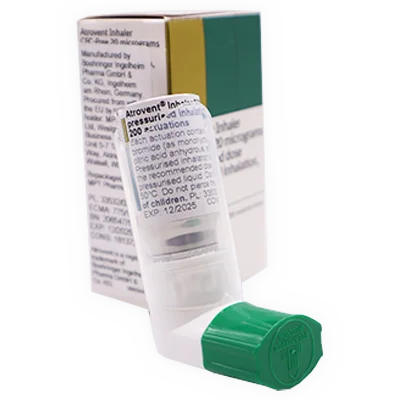
Atrovent is a prescription inhaler for people with chronic obstructive pulmonary disease. Its active ingredient, ipratropium bromide, reduces cholinergic airway constriction to support easier airflow.
Atrovent is a prescription inhaler containing ipratropium bromide, a short-acting muscarinic antagonist. It is used for airflow limitation in chronic obstructive pulmonary disease, where it relaxes airway muscles and supports bronchodilation. The inhaler provides 200 actuations for administration through the respiratory tract. [1]
Atrovent contains ipratropium bromide, an inhaled anticholinergic bronchodilator. Pharmacologically, ipratropium belongs to the short-acting muscarinic antagonist class, also called a short-acting muscarinic receptor antagonist. The medicine acts mainly within the airways, with limited absorption into the bloodstream compared with oral anticholinergic medicines.
The World Health Organization includes ipratropium bromide among established medicines used in respiratory care. Its clinical role is to reduce reversible bronchoconstriction and improve airflow in obstructive airway disease. Atrovent is supplied as a pressurised inhalation product with 200 actuations.
The inhaler does not work by treating airway inflammation in the same way as an inhaled corticosteroid. Its main action is neural: it reduces acetylcholine-driven tightening of bronchial smooth muscle.
The exact prescribed dose depends on the clinical purpose, symptom severity, age, and the treatment plan selected by the prescriber. Atrovent is administered by inhalation, using the pressurised inhaler with coordinated actuation and breathing.
Correct coordination is a frequent practical problem. If hand–breath timing is difficult, a spacer may improve delivery, provided it is compatible with the inhaler and included in the treatment plan. The mouthpiece should remain clean and unobstructed because residue can interfere with aerosol delivery.
Atrovent should not be used more frequently than prescribed. Increasing use because breathlessness is worsening can delay treatment for an exacerbation, pneumonia, pulmonary embolism, or another serious cause.
Ipratropium bromide blocks muscarinic receptors in the bronchial tree. These receptors normally respond to acetylcholine released by parasympathetic nerves. Acetylcholine can tighten airway smooth muscle and increase mucus secretion; blocking that signal reduces bronchoconstriction.
The pharmacological structure of ipratropium is related to atropine, an older antimuscarinic compound. Ipratropium is designed for local inhaled action and has limited movement across the blood–brain barrier. This helps focus its clinical effect on the respiratory tract while reducing some centrally mediated anticholinergic effects associated with systemic medicines.
The pathway can be summarised as:
Atrovent does not stimulate beta-2 receptors. Salbutamol works through beta-2 receptor activation, while ipratropium reduces muscarinic signalling. The difference explains why the two medicines can have different effects, durations, and adverse-effect patterns.
Atrovent is used mainly to relieve airflow restriction associated with chronic obstructive pulmonary disease. COPD includes persistent airway obstruction related to conditions such as chronic bronchitis and emphysema. Symptoms may include breathlessness, wheezing, chest tightness, cough, and reduced exercise tolerance.
Ipratropium provides short-acting bronchodilation. It can reduce cholinergic airway constriction, allowing air to move more freely through narrowed bronchial passages. Treatment plans for COPD may also include longer-acting bronchodilators, inhaled corticosteroids, pulmonary rehabilitation, smoking cessation support, and vaccination, depending on the person’s clinical assessment.
Atrovent is not intended to replace emergency treatment for rapidly worsening breathlessness. Sudden severe symptoms, bluish lips, confusion, or inability to speak in full sentences require urgent medical attention.
The medicine can be useful when airway narrowing has a significant vagal or cholinergic component. Its benefit may be less noticeable when symptoms are caused mainly by inflammation, infection, cardiac disease, or another condition outside the airways.
Atrovent, salbutamol, and tiotropium all support airflow, but they act on different targets and have different dosing roles.
| Medicine or class | Main pharmacology | Clinical profile |
|---|---|---|
| Atrovent | Short-acting muscarinic antagonist; blocks muscarinic receptors | Short-acting anticholinergic bronchodilation |
| Salbutamol | Short-acting beta-2 agonist; stimulates beta-2 receptors | Rapid relief of bronchial smooth-muscle constriction |
| Tiotropium | Long-acting muscarinic antagonist | Longer maintenance bronchodilation, usually with less frequent dosing |
Salbutamol activates beta-2 receptors and may produce tremor, palpitations, or a faster heartbeat. Atrovent is more likely to cause dry mouth, throat irritation, or eye-related anticholinergic symptoms. Tiotropium provides longer maintenance bronchodilation, which can make it more suitable for sustained symptom control in some COPD treatment plans.
An inhaled corticosteroid addresses airway inflammation rather than directly replacing Atrovent’s receptor action. Some patients require a combination of bronchodilator classes or an anti-inflammatory inhaler, while others need a simpler regimen based on symptom burden and exacerbation history.
The choice depends on lung function, symptom pattern, exacerbation risk, cardiovascular history, glaucoma risk, urinary symptoms, inhaler technique, and response over time. A short-acting inhaler should not be judged only by how quickly it acts; the treatment goal also includes preventing recurrent limitation and preserving daily activity.
Atrovent is not suitable for people with a previous serious hypersensitivity reaction to ipratropium bromide, atropine-like medicines, or any relevant formulation component.
Drug interactions are less extensive than with many oral medicines, yet combined anticholinergic treatment can increase dry mouth, constipation, blurred vision, urinary retention, and rapid heartbeat.
Atrovent is not for you if:
Narrow-angle glaucoma requires special care because eye exposure may raise intraocular pressure. Benign prostatic hyperplasia can make urinary retention more likely when anticholinergic activity reduces bladder contraction. People with existing urinary symptoms should report inability to pass urine promptly.
Atrovent has little systemic absorption compared with oral anticholinergics, but low absorption does not mean zero risk. Caution is also appropriate in people with cystic fibrosis, severe bladder problems, or a history of significant eye pressure disorders. Tell the prescriber about other inhalers, bladder medicines, motion-sickness medicines, and medicines used for Parkinson’s disease.
Side effects usually reflect local irritation or the anticholinergic action of ipratropium. Dry mouth is common because muscarinic blockade reduces salivary secretion. Throat irritation, cough, unpleasant taste, headache, and mild nausea can also occur.
| Adverse effect | Typical clinical pattern | Practical response |
|---|---|---|
| Dry mouth | Reduced saliva, thirst, altered taste | Sip water and maintain oral hygiene |
| Throat irritation or cough | Irritation soon after inhalation | Improve inhaler technique and rinse the mouth |
| Blurred vision | Usually follows accidental eye exposure | Stop eye exposure and seek prompt assessment if painful |
Blurred vision deserves attention when it is accompanied by eye pain, halos around lights, redness, or nausea. These symptoms can indicate increased intraocular pressure in a susceptible person. Do not dismiss severe eye symptoms as ordinary inhaler irritation.
Dry mouth can become troublesome at night and may increase dental discomfort over time. Sugar-free gum or frequent small sips of water may help, while good dental hygiene protects against caries.
Patients sometimes notice a dry throat and assume the medicine has stopped working. Local dryness does not necessarily mean that bronchodilation is absent, though worsening breathlessness requires clinical review.
Paradoxical bronchospasm is a rare but serious reaction in which breathing becomes more difficult immediately after inhalation. Wheezing, chest tightness, or sudden airway narrowing after a dose requires immediate cessation of the inhaler and urgent medical assessment. The person may need a different rapid bronchodilator according to their emergency plan.
Hypersensitivity reactions may include rash, swelling of the lips or face, throat tightness, difficulty swallowing, or sudden breathing problems. Facial swelling or airway symptoms require emergency care because they may progress quickly.
Ipratropium can also cause palpitations, constipation, nausea, or difficulty urinating, though these effects are less typical than local mouth and throat symptoms. Severe symptoms should not be managed by simply changing the inhaler technique without assessment.
Several practical errors reduce the amount of medicine reaching the lungs:
One overlooked error is pressing the canister before the lips are sealed around the mouthpiece. Much of the aerosol then remains in the room or mouth instead of entering the airways.
Another is forgetting that the inhaler contains a finite number of actuations. The 200-actuation capacity should be considered when planning regular treatment, especially if the inhaler is used frequently. An inhaler that feels mechanically functional may still provide unreliable treatment after its expected number of actuations has been reached.
Doctors generally assess three things after Atrovent is started: symptom relief, inhaler technique, and the frequency of worsening episodes. A patient may report that the medicine “does nothing” when the real problem is late actuation, shallow inhalation, or failure to breathe out before using the device. The review should include the inhaler device and the patient’s breathing pattern. It should also consider whether symptoms occur during activity or at rest. These checks can distinguish technique problems from inadequate disease control.
Clinical practice also shows that benefit can be subtle. Easier dressing, walking farther before stopping, or less chest tightness may represent meaningful improvement even when the patient does not feel an immediate dramatic change.
Atrovent does not reverse established emphysema. It reduces a component of airway narrowing and may make breathing more comfortable, but it cannot restore destroyed alveolar tissue. This distinction helps set realistic expectations.
A physician will also review whether the short-acting inhaler is being used repeatedly. Frequent reliance may signal inadequate maintenance treatment, continued exposure to tobacco smoke, infection, poor technique, or a new cardiac or respiratory problem. GOLD guidance supports regular review of inhaler technique and treatment response in COPD care. [5]
Atrovent is used to relieve airflow limitation associated with COPD through short-acting muscarinic blockade. It may reduce bronchoconstriction and improve breathing during symptomatic periods. The 2023 WHO Model List of Essential Medicines recognises ipratropium as an established respiratory medicine, while COPD treatment plans are guided by symptom burden and exacerbation risk. [2]
Atrovent blocks muscarinic receptors, while salbutamol stimulates beta-2 receptors in airway smooth muscle. Both can support bronchodilation, but their adverse effects and clinical roles differ. The 2023 SAHPRA product information considers the person’s response, heart rhythm, glaucoma risk, urinary symptoms, and inhaler technique when selecting treatment. [4]
Atrovent is a short-acting inhaled bronchodilator, but the perceived onset and degree of relief vary between patients. It is not a substitute for an emergency plan when severe breathlessness develops suddenly. The FDA’s 2022 prescribing information describes its bronchodilator role and warns about paradoxical bronchospasm after inhalation.
Blurred vision can occur when ipratropium reaches the eyes or produces anticholinergic effects in a susceptible person. Eye pain, halos, redness, nausea, or sudden visual change require urgent assessment because intraocular pressure may rise. The EMA’s 2024 safety information for inhaled anticholinergic medicines supports avoiding eye exposure during administration. [3]
People with benign prostatic hyperplasia or previous urinary retention require specific clinical assessment before using an inhaled anticholinergic. Ipratropium can worsen difficulty passing urine in susceptible individuals. The risk is relevant even though inhaled treatment generally produces less systemic exposure than oral anticholinergic therapy. The 2023 SAHPRA product information advises clinical review for urinary symptoms during anticholinergic treatment.
Immediate wheezing, chest tightness, or sudden breathlessness after inhalation may indicate paradoxical bronchospasm. Stop the inhaler and follow the prescribed emergency plan while obtaining urgent medical help. A repeated reaction should be documented and reviewed before further doses are used. The FDA’s 2022 prescribing information provides warnings relevant to paradoxical bronchospasm and hypersensitivity.
Atrovent may form part of a wider COPD regimen that includes another bronchodilator or an inhaled corticosteroid. The order, timing, and frequency should follow the prescribed treatment plan rather than being improvised. The 2023 WHO respiratory-care principles support reviewing the full inhaler regimen when symptoms remain poorly controlled.
Your order will be securely packed and shipped within 24 hours. This is exactly what your package will look like (images of an actual item sent). It has the size and look of a regular private letter (24x11x0.7 cm) and its contents cannot be seen.
I used Atrovent during a period of COPD symptoms and noticed that walking to the shops became easier. My mouth felt dry after each use, so I kept water nearby and improved my inhaler technique.
The first few doses caused throat irritation and an unpleasant taste. The symptoms eased after I slowed my inhalation, but I still needed a review because the relief did not last through the whole day.
Atrovent helped with chest tightness, though the improvement was gradual rather than dramatic. I had been pressing the inhaler too early, and the technique correction made more difference than I expected.
I experienced blurred vision after accidentally allowing the spray to reach my eyes. It settled after medical advice, but the episode made me much more careful about keeping the inhaler pointed away from my face.