Verified
I found the tablets easy on my stomach. I did not notice a dramatic change, so I continued monitoring my blood pressure instead of changing my prescribed medicine.
04 Oct 2026

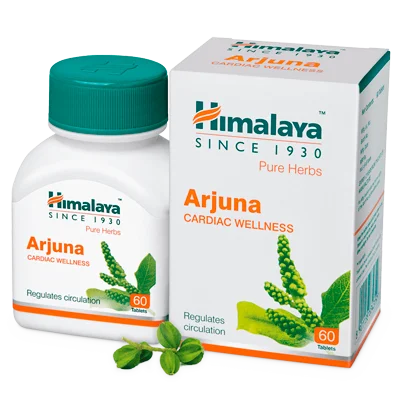
Arjuna is a plant-based tablet for adults seeking supportive cardiovascular care. Its traditional use focuses on cardiac wellness and circulation, with reported activity linked to antioxidant compounds and effects on vascular and cardiac function.
Arjuna is a herbal tablet containing the botanical ingredient associated with Terminalia arjuna, traditionally used for cardiac wellness and circulation support. It is intended for adults seeking plant-based cardiovascular support, not for replacing prescribed treatment for heart disease or high blood pressure.
Botanical studies of Terminalia arjuna have identified several groups of naturally occurring compounds. These include triterpenoids such as arjungenin, arjunic acid, and arjunolic acid, together with tannins, flavonoids, and other polyphenolic substances.
| Plant compound group | Pharmacological role studied |
|---|---|
| Triterpenoids | Antioxidant and cellular-protection activity |
| Flavonoids and polyphenols | Free-radical scavenging and vascular support |
| Tannins | Astringent activity and contribution to the plant’s chemical profile |
The presence of a compound in Terminalia arjuna research does not prove that every tablet contains the same concentration. Botanical products can vary according to extraction method, plant material, processing, and standardisation. The exact serving amount for Arjuna should therefore follow the product-specific directions rather than dosing information published for loose powder or laboratory extracts.
One practical point is easy to miss: powder, decoction, and tablet preparations are not automatically interchangeable. A spoonful of bark powder cannot be treated as equivalent to one tablet.
Arjuna is supplied as tablets. Use the serving quantity and frequency stated for this product, and swallow the tablets with water unless a healthcare professional has given different instructions.
Food may affect how some herbal preparations are tolerated. If Arjuna causes nausea or stomach discomfort, taking it with a meal may be more comfortable, provided this is compatible with the product’s stated directions.
Antioxidants are compounds that can help limit oxidative damage in cells. Oxidative stress occurs when reactive molecules exceed the body’s ability to neutralise them. Laboratory findings suggest that constituents of Terminalia arjuna can contribute to antioxidant activity.
Arjuna has a long history of traditional use for cardiovascular support. Researchers have examined its possible cardioprotective property, antioxidant activity, vascular effects, and influence on exercise tolerance in people with stable cardiac symptoms. A small clinical literature exists, though it does not match the scale or certainty of evidence supporting standard treatments for heart disease. The National Institute for Health and Care Excellence (NICE) provides evidence-based cardiovascular guidance that helps place supplement claims in context.
Some studies have explored Arjuna as an adjunct in chronic coronary artery disease and angina. The term angina describes chest discomfort caused by inadequate oxygen supply to heart muscle. Arjuna must not be used to self-treat new, severe, or unexplained chest pain.
Traditional and early clinical research has also examined a possible anti-hypertensive property. Blood pressure can fluctuate for many reasons, and a supplement cannot be assumed to produce a predictable reduction. People taking treatment for hypertension should not reduce or stop prescribed tablets because they begin using Arjuna. Clinical decisions should account for the underlying diagnosis and the person’s full treatment plan. Monitoring symptoms and blood-pressure readings can help a clinician assess tolerability.
A pharmacovigilance study indexed in PubMed examined long-term use of Terminalia arjuna alongside conventional care in chronic coronary artery disease, while also highlighting the need for ongoing safety observation [1]. The findings support further research, not a blanket claim that Arjuna treats heart disease independently.
| Approach | Main role |
|---|---|
| Arjuna herbal tablet | Traditional plant-based support for cardiac wellness and circulation |
| Prescribed cardiovascular medicine | Targeted treatment for diagnosed hypertension, angina, rhythm disorders, or heart failure |
| Lifestyle-based cardiovascular support | Improves risk factors through activity, dietary pattern, sleep, weight management, and smoking cessation |
Prescribed treatment has defined active ingredients, studied doses, and monitoring requirements. Arjuna has a different evidence base and should not replace medicines prescribed for hypertension, coronary artery disease, heart failure, or abnormal heart rhythm.
Lifestyle measures remain relevant even when Arjuna is used. Regular physical activity, appropriate salt intake, sleep quality, and smoking cessation can influence cardiovascular risk through mechanisms that no single supplement can fully reproduce.
The World Health Organization’s herbal-medicine safety guidance supports documenting suspected adverse reactions and considering interactions with conventional treatment [2].
Arjuna is not for you if you plan to replace prescribed cardiovascular treatment, have urgent symptoms, or cannot review its use with a qualified clinician. Do not use it for sudden chest pain, fainting, severe breathlessness, or worsening heart symptoms. Talk to a clinician before using it if you take blood-pressure or blood-clotting medicines, are pregnant or breastfeeding, have chronic liver or kidney disease, or have reacted to a Terminalia product before.
Arjuna may be tolerated without problems by some adults, yet herbal products can still cause adverse effects. Possible reactions include stomach discomfort, nausea, constipation, loose stools, headache, dizziness, or an allergic response.
Dizziness deserves attention in anyone using blood-pressure-lowering treatment. A combined effect on blood pressure could increase light-headedness when standing. Skin rash, facial swelling, breathing difficulty, fainting, severe weakness, or persistent vomiting require prompt medical attention.
People with heart disease should also pay attention to symptom changes. Worsening chest pain, breathlessness at rest, fainting, new palpitations, or swelling of the legs require urgent medical evaluation rather than an increase in Arjuna.
The botanical research does not establish a reliable frequency for every possible adverse effect. Safety data can also differ between bark powder, extracts, and tablets.
Several habits can make Arjuna use less safe or less informative.
Doctors generally assess Arjuna in the context of the person’s cardiovascular diagnosis, current medicines, blood-pressure readings, kidney function, liver function, and symptoms. A clinician may consider it as an adjunct for an adult who is stable, understands the limited evidence, and is not using it to replace essential treatment.
A sensible clinical expectation is gradual supportive use rather than an immediate effect. Arjuna should not be judged by whether it rapidly relieves chest pain or produces a dramatic blood-pressure change.
One issue physicians often encounter is incomplete disclosure. Patients may mention prescription tablets but forget to include herbal products, teas, powders, or traditional remedies. That omission makes interaction assessment harder.
For South African consumers, SAHPRA is the national authority associated with health-product regulation and safety oversight. Regulatory status and clinical efficacy are separate questions: a product’s regulatory pathway does not guarantee that it will produce the same effect in every person.
Arjuna is traditionally used for cardiac wellness and circulation support, but it is not a universal treatment for heart disease. The WHO’s medicinal-plant safety framework, published in 1999, supports distinguishing traditional use from proven treatment of diagnosed cardiovascular conditions. Adults with hypertension, angina, heart failure, or rhythm problems should keep their prescribed care in place. Arjuna is better considered a supportive botanical option when its use fits the person’s clinical circumstances.
Research on Terminalia arjuna has explored possible effects on blood pressure and vascular function, yet the evidence is not strong enough to predict a specific reduction for an individual. The European Medicines Agency’s general approach to herbal medicines, reflected in guidance available since 2004, recognises that traditional-use evidence and clinical efficacy evidence are different categories. People already using antihypertensive medicines may experience added dizziness or low blood pressure. Home readings and symptom monitoring are more useful than assuming that the supplement will produce a fixed result.
Potential interactions are relevant when Arjuna is combined with blood-pressure medicines, heart-rhythm medicines, medicines affecting clotting, or treatment for heart failure. SAHPRA’s complementary-medicine oversight framework, established in 2017, places emphasis on product safety and responsible use, while interaction decisions still depend on the person’s full medicine list. Include prescription medicines, over-the-counter products, and other herbal preparations when treatment is reviewed. Do not stop a cardiac medicine to make room for Arjuna.
There is no reliable clinical timetable showing when every user will feel an effect from Arjuna. A PubMed-indexed clinical report from 2014 examined longer-term use in chronic coronary artery disease, but that type of evidence cannot establish a universal onset time. Symptom improvement should not be used as the only measure of cardiovascular benefit. Blood-pressure readings, exercise tolerance, adverse effects, and the underlying diagnosis provide a more useful clinical picture.
Pregnancy and breastfeeding require extra caution because safety data for many herbal preparations are limited. WHO guidance from 2004 on herbal-medicine pharmacovigilance supports reporting and evaluating possible adverse reactions rather than assuming that traditional use proves safety in pregnancy. Arjuna should therefore be avoided during pregnancy or breastfeeding unless a qualified clinician has recommended it for the individual. The same caution applies when trying to conceive or when caring for a newborn.
Arjuna has traditional and research interest in angina and chronic coronary artery disease, but it should not be used as sole treatment. The WHO cardiovascular-care approach, set out in guidance published in 2007, relies on diagnosis, risk assessment, and evidence-based treatment rather than symptoms alone. New chest pressure, pain spreading to the arm or jaw, sweating, faintness, or breathlessness require urgent medical care. A supplement cannot provide the emergency response required for a possible cardiac event.
Your order will be securely packed and shipped within 24 hours. This is exactly what your package will look like (images of an actual item sent). It has the size and look of a regular private letter (24x11x0.7 cm) and its contents cannot be seen.
I found the tablets easy on my stomach. I did not notice a dramatic change, so I continued monitoring my blood pressure instead of changing my prescribed medicine.
The first few doses made me feel slightly light-headed when I stood up. The symptom settled after I stopped taking it, and I chose not to restart without reviewing my blood-pressure treatment.
I preferred tablets to preparing herbal powder. My main difficulty was remembering the serving consistently on shift-work days.
I hoped it would improve my exercise tolerance quickly, but the change was not clear. The useful part was keeping a symptom diary and discussing the results with my doctor.